
A screenshot can show a vehicle, avatar or corridor, but it cannot prove acceleration, traction, collision response or steering weight. The former version of this article named driving games that are no longer in the verified public set. The revised article keeps the useful method and removes unsupported handling descriptions.
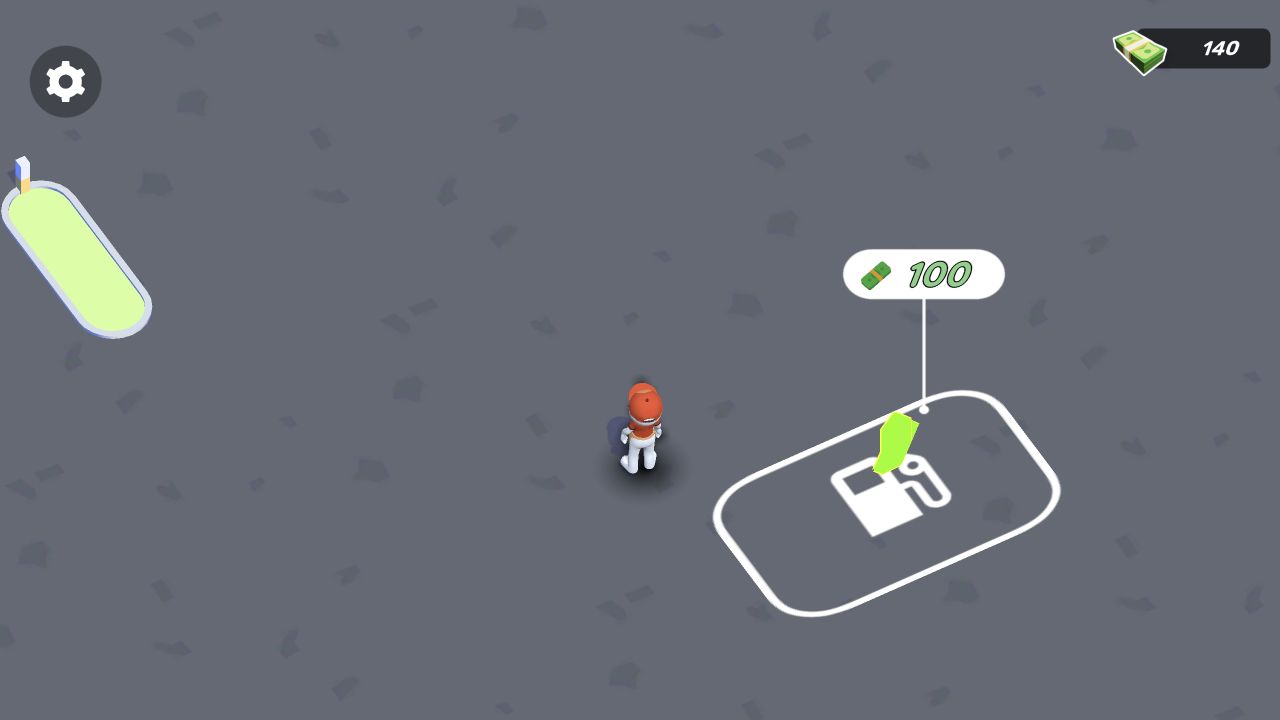
Gas Station Simulator displayed WASD and mouse-drag movement in a top-down forecourt. Build a Rollercoaster presented an avatar beside a floor button and asked the player to approach a block shop. Amaze! supplied the clearest movement result: each direction carried the ball to the next wall. These records establish control prompts and visible displacement, not a universal physics model.
A physics claim needs repeated measurements
Until a current racing title completes that protocol, fulegames should not publish best-handling lists or detailed vehicle advice. Readers can still use the checklist to judge whether a game communicates movement clearly and whether the evidence supports the language used in its review.
- Record starting position and the exact duration or count of inputs.
- Repeat acceleration, turning and braking on the same surface.
- Capture one controlled collision and compare pre- and post-impact state.
- Separate camera movement from object movement.
- Do not call motion realistic without defining the measured comparison.
What the linked records actually contain
Gas Station Simulator was tested on 2026-08-13 in Codex in-app Chromium 151.0.7922.76 at 1280×720. The recorded inputs were Click Let’s Play; Focus the scene and press W. The visible record says: The session loaded into a top-down station forecourt. The tutorial displayed both WASD and mouse-drag movement. Starting cash was 140 and the first marked purchase cost 100.
Build a Rollercoaster: Simulator was tested on 2026-08-13 in Codex in-app Chromium 151.0.7922.76 at 1280×720. The recorded inputs were Close the preroll; Focus the game and press W. The visible record says: The avatar spawned beside a red floor button and an Income sign. The opening objective was to get closer to the block shop. The HUD started at 75 coins and zero diamonds.
Amaze! was tested on 2026-08-13 in Codex in-app Chromium 151.0.7922.76 at 1280×720. The recorded inputs were Click game canvas; ArrowRight, then ArrowUp. The visible record says: Level 1 opened with an L-shaped corridor around a central void. Right painted the bottom corridor and Up painted the right edge. Each direction carried the ball to the next wall rather than one square.
These records support only the states and inputs described above. They do not establish later-level quality, average session length, mobile behavior, popularity, learning effects or competitive balance unless a separate source or test explicitly covers that question.
References and evidence
- Gas Station Simulator — hands-on evidence — Desktop (macOS), Codex in-app Chromium 151.0.7922.76, 1280×720; tested 2026-08-13.
- Build a Rollercoaster: Simulator — hands-on evidence — Desktop (macOS), Codex in-app Chromium 151.0.7922.76, 1280×720; tested 2026-08-13.
- Amaze! — hands-on evidence — Desktop (macOS), Codex in-app Chromium 151.0.7922.76, 1280×720; tested 2026-08-13.