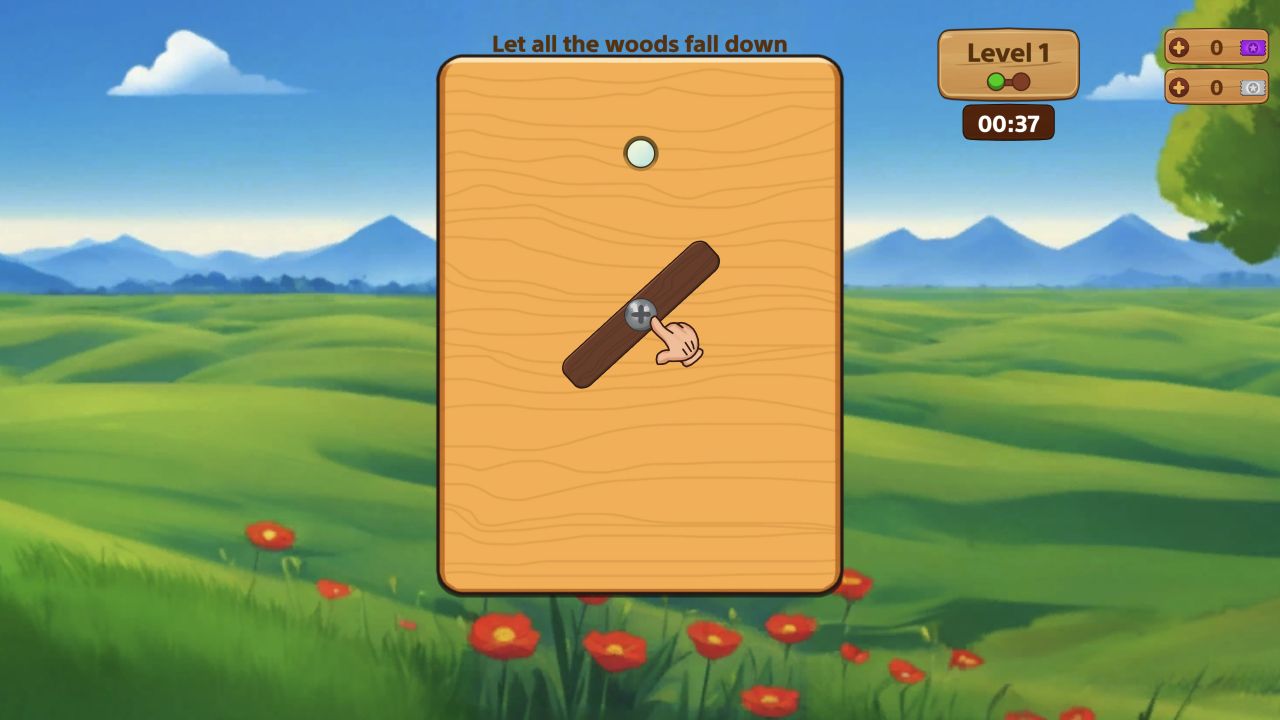
Adventure games

Story, exploration, environmental puzzles, and discovery for players who want a browser session with a sense of place instead of pure score chasing.

6 editor-reviewed130 total in the playable library

Editor-reviewed picks

Editor-reviewed picks

These games have original fulegames notes, controls references, tips, pros and cons, and FAQ entries written after hands-on review.

Axe Run — play free in your browser
Robot Unicorn Dash — play free in your browser
Super Frog Adventure — play free in your browser
Build a Rollercoaster: Simulator — play free in your browser
Bark & Blast — play free in your browser
Obby: Climb and Slide — play free in your browser

Full game library

Full game library

This browsable library keeps every playable game visible. Cards marked Library are playable entries whose full editorial review is still pending.

Adventure is broader than old inventory puzzles

Adventure games are often misunderstood because the label carries memories of locked doors, strange item combinations, and pixel hunting from classic point-and-click design. That history matters, but the browser version of adventure has become wider. It includes short walking mysteries, puzzle platformers, exploration rooms, narrative escape games, and compact quests where movement matters as much as dialogue. The common thread is not a single control scheme. It is the promise that curiosity moves the player forward. You look at a room, a path, a character, or a machine and ask what changed after your last action.

The genre survived the move from Flash to HTML5 by becoming smaller and more focused. Browser adventures rarely have the budget for sprawling worlds, so the strongest ones build dense spaces instead. A cabin with six meaningful objects can be better than a continent of decorative screens. A ten minute puzzle sequence can feel richer than an hour of walking if every detail teaches a rule. This scale suits the open web. Players can finish a complete story in one sitting, send a link to a friend, or return later without remembering a dozen quest logs.

The web has its own adventure flavor

Web adventure favors immediacy. The first scene has to establish tone, interaction, and goal before the tab competes with messages, work, or another game. That pressure creates a different rhythm from console adventures. Exposition is shorter. Movement is usually simpler. Puzzles rely on visual relationships rather than long text archives. When dialogue appears, it tends to be functional: a clue, a joke, a hint about a character's motive. The best browser adventures feel edited. They know the player may only have twenty minutes, so they make every screen carry weight.

This does not mean the genre is shallow. A small adventure can hide surprising depth in optional endings, environmental storytelling, route choices, or a puzzle that changes meaning after a reveal. The trick is compression. Instead of asking for patience up front, web adventures earn patience through quick discoveries. A locked elevator, a cracked mirror, a strange map, a missing battery, a repeated symbol: each detail tells the player that paying attention will be rewarded. That is the genre's quiet magic.

Sub-genres you will meet on a browser page

Point-and-click remains the classic form, but modern browser adventure also leans on three other families. Walking-sim style pieces focus on mood and interpretation, often asking the player to explore a house, street, ship, or memory space without combat. Metroid-style platform adventures use movement upgrades to turn old rooms into new routes. Escape-room games compress adventure into object logic: inspect, combine, unlock, repeat. Some games mix these forms, using platforming to pace a story or escape puzzles to break up exploration. Knowing the family helps you pick the right evening.

If you want a relaxed story, choose a walking mystery or dialogue-led quest. If you want mechanical skill, choose a platform adventure where jumping and timing matter. If you want a compact brain workout, choose an escape-room design. If you want to play with someone beside you, point-and-click is often best because two people can discuss clues without fighting over controls. Adventure is flexible precisely because it is organized around discovery rather than speed.

Choosing an adventure for the time you actually have

The most common mistake is starting the wrong size of adventure. A 15 minute escape game and a 90 minute narrative platformer can both be excellent, but they fit different moods. Before clicking, scan for signals: number of rooms, save support, chapter labels, inventory complexity, and whether the description mentions multiple endings. A game with no save system should make progress quickly. A game with many items should label interactive objects cleanly. A game with story choices should show whether choices are flavor or route changes. These small clues prevent the stale feeling of leaving halfway through a mystery.

It also helps to choose by attention level. If you are tired, pick an atmospheric adventure with generous hinting. If you want to feel clever, pick an escape puzzle with clear object logic. If you want a sense of travel, pick a platform adventure with new areas and movement upgrades. The best choice is not always the highest rated one. It is the one whose pacing matches your available focus.

Sticking with longer adventures without getting stuck

Longer adventures reward a different kind of patience than action or arcade games. The useful habit is note-taking, even if the note is only a few words in your head: red key, balcony code, statue faces left, radio repeats 314. Browser games often avoid heavy journals, so players who track clues lightly move faster. Another habit is revisiting old rooms after each major change. Adventure designers love to make a small environmental shift carry new meaning. A drawer that looked decorative may matter after power returns. A character's earlier line may become a hint after a map appears.

When you are stuck, change the question from "what do I use" to "what changed." Did a sound play? Did an object vanish? Did a route open? Did a character move? This reframing reduces random clicking. It also makes walkthroughs less tempting because you learn the game's logic rather than only the next step. The satisfaction of adventure comes from realizing that the answer was visible, just not yet understood.

The future of adventure on the open web

Adventure may be one of the genres best suited to the modern browser because it benefits from intimacy more than spectacle. Better WebGL and audio support will help, but the heart of the genre is still authored attention. A single room, written well and staged cleanly, can hold a player longer than a large but empty map. Expect more short serialized adventures, more escape-room hybrids, and more narrative experiments that use browser delivery as a publishing format. The open web lets small teams test a strange story without asking the player to install a launcher.

For players, the result is a library of compact journeys. Some will last ten minutes and feel like a puzzle box. Some will last an evening and feel like a tiny novel. The category is healthy because it does not need to chase the scale of premium adventure games. It can specialize in moments: a door opening, a clue clicking into place, a room changing after one quiet decision.

A useful test for any adventure game is whether the world remembers the player's attention. If a note, object, sound, or locked path appears early, the game should make that detail matter later in a way that feels deliberate. This memory is what gives small browser adventures weight. They may not have enormous casts or cinematic budgets, but they can make a single room feel authored. Players should also notice how hints are delivered. A good hint narrows thought without replacing it. A bad hint either gives the answer away or repeats vague flavor. Adventure design lives in that narrow space between mystery and clarity. The category is especially rewarding when you slow down enough to read backgrounds, object names, repeated shapes, and small changes after each solved step. The fun is not only reaching the ending. It is learning how the game wanted you to look.

Frequently asked

Blog

Read next from the blog

Six random editorial picks to keep the browsing going.
All articles →
Robby The Lava Tsunami gameplay preview used as editorial artwork for Parkour and Platforming in Browser Games

Lists

Parkour and Platforming in Browser Games

The best browser parkour and platforming games turn movement into a readable conversation between timing, route choice, and level design.

Jan 8, 20266 min read

Hook Pin Jam gameplay preview used as editorial artwork for Simple Clicker Games With Real Depth

Lists

Simple Clicker Games With Real Depth

The strongest clicker games start with a single obvious action and then keep changing what that action means.

Jan 20, 20266 min read

Business Go gameplay preview used as editorial artwork for What Makes a Good .IO Game in 2026

Industry

What Makes a Good .IO Game in 2026

The best .IO games still succeed on three fundamentals: instant entry, painless exit, and a skill gap that players can actually read.

Feb 22, 20266 min read

Coffee Color Blocks gameplay preview used as editorial artwork for Progression Systems in Idle Games, Explained

Guides

Progression Systems in Idle Games, Explained

The best idle games are not idle all the way through; they move through active, passive, and reset phases that each ask a different question.

Feb 18, 20266 min read

Ragdoll Crash-Test: Throw and Break! gameplay preview used as editorial artwork for Why Controls Matter More Than Graphics

Opinion

Why Controls Matter More Than Graphics

Pretty art can attract attention, but poor controls are what make players close the tab for good.

Mar 10, 20266 min read

Screw Match gameplay preview used as editorial artwork for Five Mistakes New Puzzle Players Make

Skill guides

Five Mistakes New Puzzle Players Make

Most puzzle beginners do not lose because they lack intelligence; they lose because they bring the wrong habits to the board.

Mar 5, 20266 min read