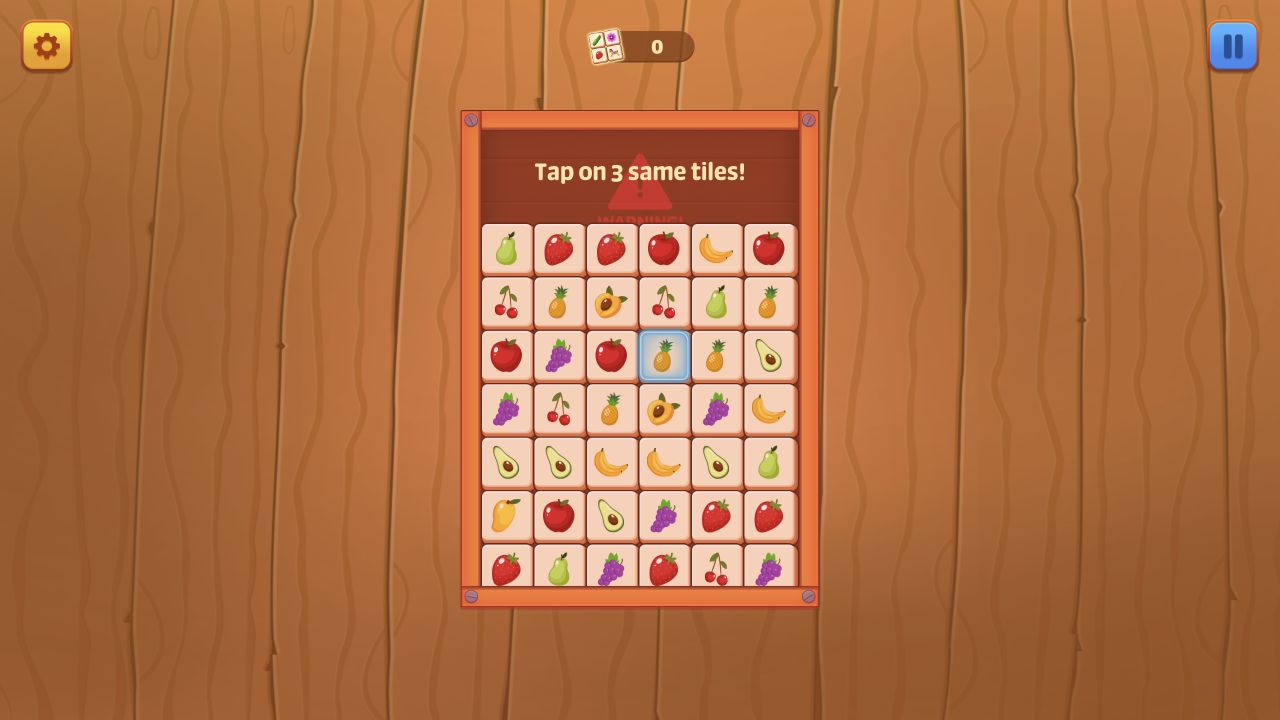
Casual games
Low-friction browser games for relaxed attention: light puzzles, merge loops, tile clears, soft arcade play, and quick sessions that do not demand a long commitment.
25 total in the playable library
Full game library
Full game library
This browsable library keeps every playable game visible. Cards marked Library are playable entries whose full editorial review is still pending.
Casual describes a relationship with time
Casual is not a single genre. It is a promise about how a game fits into life. A casual browser game should tolerate interruption, explain itself quickly, and give the player a satisfying action within the first minute. The player may be between meetings, waiting for food, sitting on a train, or winding down before sleep. That context shapes everything. Long tutorials, strict timers, and complex keybinds can turn a casual idea into work. The best casual games respect partial attention without treating the player as careless.
This is why casual covers so many forms: tile matchers, merge games, light physics puzzles, simple runners, hidden-object scenes, sorting games, idle loops, and friendly word or number challenges. They do not share a theme. They share a soft entry. A player can click, understand, and feel progress before deciding whether to stay. Casual design is at its strongest when it makes small decisions feel pleasant rather than meaningless.
The modern casual contract
The casual contract has three parts: clear goal, low penalty, visible progress. The goal might be clearing tiles, sorting colors, merging objects, reaching a distance, or upgrading a tiny business. The penalty for failure should be light enough that the player does not regret starting. Progress should appear through levels, score, unlocks, completed boards, cleaner layouts, or a better personal rhythm. When one part is missing, the game weakens. A clear goal with harsh penalty becomes stressful. Low penalty with no progress becomes empty. Progress without clarity becomes a chore.
Browser delivery adds a fourth part: instant trust. The player does not want to create an account for a five minute puzzle. They want the game to load, respond, and save enough progress that leaving does not feel wasteful. Casual games are often judged less by their most advanced level than by their first three interactions. If those interactions feel smooth, the player gives the loop permission to continue.
Why casual games work so reliably
Casual games work because they reduce decision cost. A large role-playing game asks what build, quest, dialogue path, inventory plan, and time commitment the player wants. A casual game asks one small question now. Can you clear this group? Can you place this piece? Can you merge these two objects? Can you choose the next upgrade? That small question is easy to answer, and answering it creates a tiny reward. Over a session, tiny rewards build momentum. This is not accidental; it is the genre's central craft.
The format also fits adult schedules. Many players who love games no longer have predictable blocks of free time. Casual browser games let them keep the habit of play without negotiating a huge commitment. A ten minute session can still feel complete if the game is tuned well. This is why casual should not be treated as lesser design. It solves a real life problem: how to make play available when attention is fragmented.
Tile, merge, idle, and light puzzle families
Tile games are the most familiar casual family because they combine pattern recognition with immediate visual cleanup. Merge games add growth and collection, turning small combinations into a sense of expansion. Idle and clicker loops reduce pressure further, letting numbers and upgrades carry progress between active bursts. Light puzzles sit between casual and logic play, offering challenge without the sternness of a pure brainteaser. A good casual catalog needs all of these because moods differ. Sometimes the player wants a board to solve. Sometimes they want a garden, shop, or factory to slowly improve.
The right pick depends on energy. Choose tile clears when you want neatness. Choose merge when you want accumulation. Choose idle when you want progress that can survive distraction. Choose light logic when you want to feel clever without committing to a hard puzzle. The genre's breadth is a strength, but only if players can recognize these differences before clicking.
Finding the right casual game for your mood
Mood matching matters more in casual than in many genres. If you are tired, a timer can feel rude. If you are restless, a slow merge board can feel dull. If you are anxious, a predictable sorting game may be perfect. If you want gentle challenge, a tile puzzle with limited moves may be better than endless play. Before starting, notice what the game foregrounds: speed, neatness, collection, planning, decoration, or number growth. That signal tells you whether it will soothe, stimulate, or frustrate you.
Players should also watch for friction disguised as depth. Too many currencies, daily claims, locked buttons, and interruption screens can bury a good casual loop. Browser casual works best when the main action remains close to the surface. The moment a player spends more time managing menus than playing the board, the design has drifted away from its purpose.
How casual now bridges into mid-core play
The most interesting casual games in 2026 are not necessarily the easiest ones. Many now bridge into mid-core design by adding missions, collections, daily challenges, upgrade paths, and light strategy while keeping the first session friendly. This bridge works when complexity opens gradually. A tile game can add blockers after the player understands clears. A merge game can add production chains after the player understands matching. An idle game can add prestige after the player understands upgrades. The entrance stays casual, but the ceiling rises.
That bridge is healthy because players grow. Someone who starts with a relaxed sorting game may later want tighter move limits. Someone who enjoys a merge board may become curious about economy planning. Casual is not a dead end. It is often the doorway through which busy players return to games. The browser is a natural home for that doorway because trying the next step costs only a click.
A good casual game also knows when to stop asking for attention. Many players open this category because they want relief from complicated systems, so pacing has to be humane. A board should not beg for five different rewards after every level. A merge game should not hide the main action behind a parade of claims. A light puzzle should not punish a phone call or a child asking a question. The strongest casual games are confident enough to be quiet. They let the satisfying action sit at the center and use progression as seasoning, not as noise. Players can protect their own enjoyment by noticing when a game shifts from relaxation into obligation. If a daily streak starts feeling like homework, the casual contract has broken. The right game should fit the break you have, not stretch the break until it belongs to the game.
Frequently asked
What does casual mean in games?
It means low entry friction, short sessions, forgiving failure, and goals that are easy to understand quickly. It does not mean the game has no depth.
Which casual games are best for relaxing?
Sorting games, tile clears without harsh timers, merge boards, and gentle idle games are usually the calmest choices.
Can casual games become challenging?
Yes. Many start simple and add deeper goals, move limits, upgrades, or daily challenges after the basic loop is clear.
Blog
Read next from the blog
Six random editorial picks to keep the browsing going.
Lists
The Best Merge Games for Relaxing Play
The most soothing merge games turn clutter into order at a pace that feels deliberate rather than sleepy.
Behind the scenes
How We Review Browser Games (And What We Look For)
A transparent look at the simple, repeatable review process we use before a browser game earns editorial coverage on the site.
Skill guides
Driving Games: How Physics Models Shape the Feel
Browser driving games can feel wildly different because they are built on different ideas of speed, grip, and failure.
Guides
Five Common Mistakes New Shooting Game Players Make
If you keep dying in the first five minutes of a shooting game, the cause is usually one of these five mistakes — not a lack of skill.
Skill guides
Mastering Aim in Browser Shooter Games
You do not need a paid aim trainer to improve in browser shooters if you use free games with a clear job for each part of the skill.
Skill guides
How to Train Pattern Recognition With Browser Puzzles
A simple four-week puzzle routine can improve pattern recognition if you treat each session as practice in noticing shape, not just clearing boards.