
A tile game can ask a player to compare objects, track exposed pieces and reserve space. Describing those actions is different from claiming the game trains the brain. We did not run a controlled study, measure cognition or compare players before and after play. The title and article now stay with what the boards visibly demand.
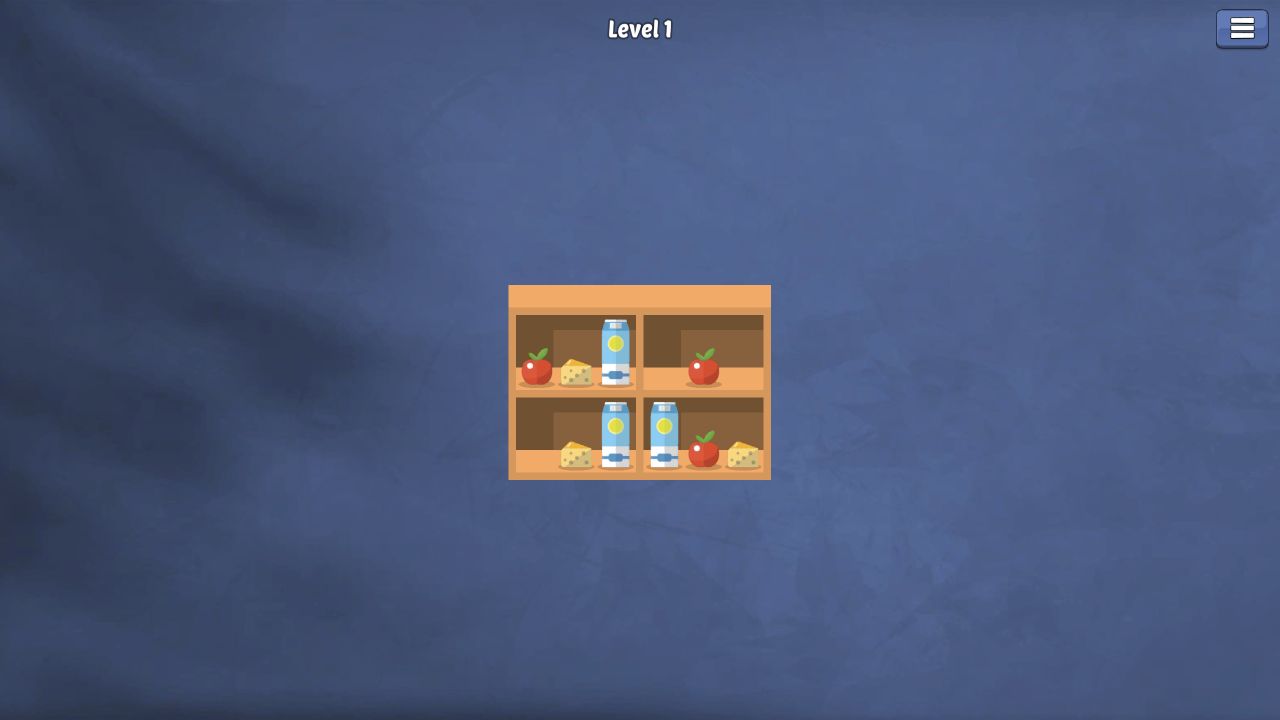
Good Sort Master opened with exactly three apples, three cheese wedges and three milk cartons on a two-by-two shelf; the attempted apple drag did not rearrange the item. Tile Match revealed a six-column grid after the first click. Mahjong Solitaire Zodiac instructed the player to remove two identical exposed tiles from a layered stack.
Three observable kinds of attention
These are task demands, not promised benefits. A reader may enjoy practicing deliberate observation, but this page does not say the effect transfers to school, work or health. That stronger claim would require suitable research beyond a game review.
- Count: identify whether a complete visible set exists before moving anything.
- Exposure: distinguish available tiles from pieces blocked by the layer above.
- Capacity: track how much temporary space the interface appears to provide.
- Feedback: verify that a tap or drag changed the board before inferring the control.
What the linked records actually contain
Good Sort Master: Triple Match was tested on 2026-08-13 in Codex in-app Chromium 151.0.7922.76 at 1280×720. The recorded inputs were Close the preroll; Drag an upper-left apple toward the upper-right shelf. The visible record says: Level 1 opened on a two-by-two shelf. The shelf contained exactly three apples, three cheese wedges, and three milk cartons. The attempted apple drag did not rearrange the item.
Tile Match was tested on 2026-08-13 in Codex in-app Chromium 151.0.7922.76 at 1280×720. The recorded inputs were Close the preroll; Click the center of the game canvas. The visible record says: The opening used a narrow wooden chute rather than a full-width board. The tutorial said to tap three identical tiles. The click expanded the lower queue into a six-column fruit-tile grid with one pineapple highlighted.
Mahjong Solitaire Zodiac was tested on 2026-08-13 in Codex in-app Chromium 151.0.7922.76 at 1280×720. The recorded inputs were Close the preroll; Click two exposed tiles in the tutorial stack. The visible record says: The first layout was a compact layered stack over a ram illustration. The instruction explicitly said to tap two identical tiles to remove them. Only the outermost uncovered tiles were visually available around the stack.
These records support only the states and inputs described above. They do not establish later-level quality, average session length, mobile behavior, popularity, learning effects or competitive balance unless a separate source or test explicitly covers that question.
References and evidence
- Good Sort Master: Triple Match — hands-on evidence — Desktop (macOS), Codex in-app Chromium 151.0.7922.76, 1280×720; tested 2026-08-13.
- Tile Match — hands-on evidence — Desktop (macOS), Codex in-app Chromium 151.0.7922.76, 1280×720; tested 2026-08-13.
- Mahjong Solitaire Zodiac — hands-on evidence — Desktop (macOS), Codex in-app Chromium 151.0.7922.76, 1280×720; tested 2026-08-13.