
Incremental games are often described with a simple loop: earn, spend and earn faster. That description is useful only after the page shows which number is a resource, which action changes it and what a purchase actually unlocks. Our current evidence does not include a verified classic clicker with offline earnings or a prestige reset, so this guide stays with the systems we could see on opening screens.
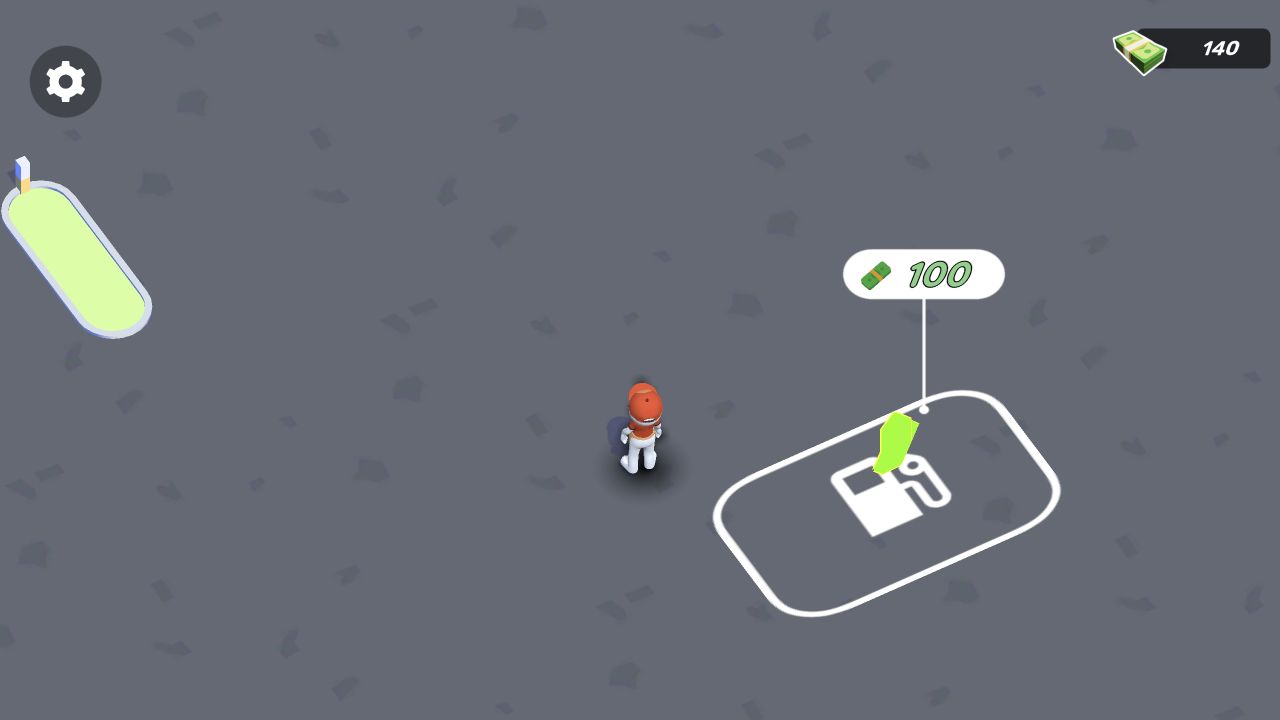
Three sessions provide different examples. Gas Station Simulator showed 140 starting cash and a first marked purchase costing 100. Build a Rollercoaster: Simulator showed 75 coins, zero diamonds and an objective directing the avatar toward a block shop. Fruit Merge began at score zero with a next-fruit preview and a visible size progression. None proves a long-term economy, but each exposes a decision language.
Name every visible quantity before spending
A beginner should first separate spendable currency, score and preview information. Cash next to a purchase marker suggests an immediate transaction; score beside a merge container may simply report performance. A next-item preview is not currency at all, but it changes placement decisions. Treating all numbers as progress creates confusion before the system has even taught its rules.
The Gas Station record supports one concrete comparison: the opening purchase represented most of the visible starting cash. It does not tell us whether buying immediately is optimal, how quickly cash returns, or whether later upgrades scale well. Those questions require a longer, separately logged session.
Look for a reversible first experiment
This approach works for clickers too. A click should be tied to a visible increment; an upgrade should be tied to a measurable change in rate or value. If the game continues while the tab is closed, the elapsed time and return state need their own record. The label idle is not proof that offline progress exists.
- Identify the cheapest clearly labeled action or the tutorial-marked objective.
- Record the counter before and after the action instead of relying on animation alone.
- Check whether the interface explains the result, unlocks a new option or merely changes score.
- Stop short of efficiency claims until the same resource has been earned and spent more than once.
What a first-screen review can honestly conclude
The Build a Rollercoaster session can support that movement and a shop objective appear before construction evidence. Fruit Merge can support that the opening communicates a sequence of merge outcomes. Gas Station can support that the first scene combines navigation with a visible purchase. It cannot support a claim that any of them remains deep, balanced or rewarding after an hour.
For a beginner, that limitation is helpful. The first goal is not to solve the economy from a screenshot. It is to understand what the interface is asking, perform one recorded action and decide whether the resulting feedback is clear enough to continue.
What the linked records actually contain
Gas Station Simulator was tested on 2026-08-13 in Codex in-app Chromium 151.0.7922.76 at 1280×720. The recorded inputs were Click Let’s Play; Focus the scene and press W. The visible record says: The session loaded into a top-down station forecourt. The tutorial displayed both WASD and mouse-drag movement. Starting cash was 140 and the first marked purchase cost 100.
Build a Rollercoaster: Simulator was tested on 2026-08-13 in Codex in-app Chromium 151.0.7922.76 at 1280×720. The recorded inputs were Close the preroll; Focus the game and press W. The visible record says: The avatar spawned beside a red floor button and an Income sign. The opening objective was to get closer to the block shop. The HUD started at 75 coins and zero diamonds.
Fruit Merge: Juicy Drop Game was tested on 2026-08-13 in Codex in-app Chromium 151.0.7922.76 at 1280×720. The recorded inputs were Close the preroll and confirmation; Click the center of the container. The visible record says: The run opened at score 0 with a small orange fruit above an empty container. The next-fruit preview showed a small green fruit. The bottom legend displayed a progression from small berries to pineapple and watermelon.
These records support only the states and inputs described above. They do not establish later-level quality, average session length, mobile behavior, popularity, learning effects or competitive balance unless a separate source or test explicitly covers that question.
References and evidence
- Gas Station Simulator — hands-on evidence — Desktop (macOS), Codex in-app Chromium 151.0.7922.76, 1280×720; tested 2026-08-13.
- Build a Rollercoaster: Simulator — hands-on evidence — Desktop (macOS), Codex in-app Chromium 151.0.7922.76, 1280×720; tested 2026-08-13.
- Fruit Merge: Juicy Drop Game — hands-on evidence — Desktop (macOS), Codex in-app Chromium 151.0.7922.76, 1280×720; tested 2026-08-13.