
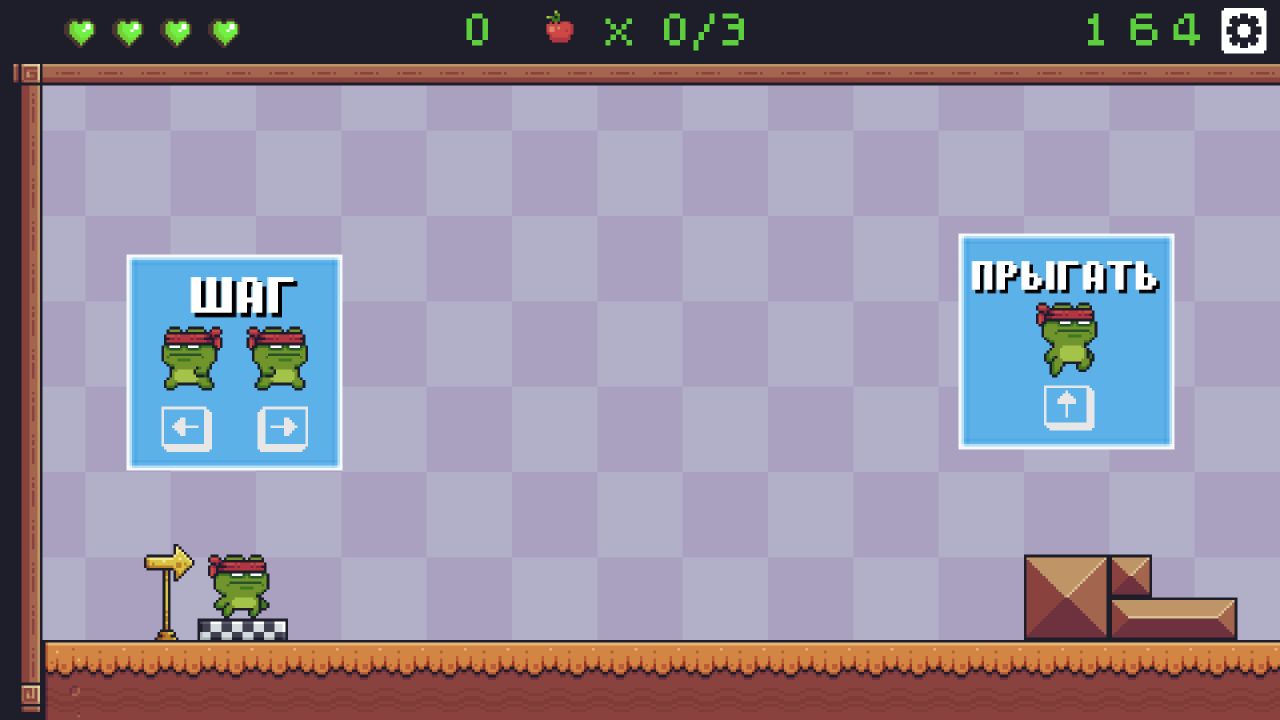
Platforming lives in motion, so a still screenshot is only a starting state. Super Frog Adventure displayed movement and jump tutorials, but our discrete inputs did not show clear traversal. Robot Unicorn Dash reached a live run with Jump and Dash labels. Build a Rollercoaster placed an avatar beside a floor button and shop objective.
These records support three different statements: one control remains unresolved, one live action vocabulary is visible, and one scene presents navigational intent before construction. None supports a claim about the full route or difficulty curve.
A platforming review should record
The honest recommendation is conditional. Inspect Robot Unicorn Dash for a verified live transition; inspect Super Frog Adventure for a documented opening whose movement needs retesting. Evidence can be useful even when it prevents a confident verdict.
- Starting position and camera frame.
- Exact movement or jump input.
- Landing or displacement visible after the input.
- Whether failure resets position and how long that reset takes.
- Any control that remains unresolved.
What the linked records actually contain
Super Frog Adventure was tested on 2026-08-13 in Codex in-app Chromium 151.0.7922.76 at 1280×720. The recorded inputs were Click the canvas; Press ArrowRight repeatedly, then ArrowUp. The visible record says: The first scene opened with four hearts, a 0/3 fruit counter, and a 196-second timer. Tutorial panels labeled horizontal movement and jumping. Discrete key presses did not produce a clearly visible traversal while the timer continued.
Robot Unicorn Dash was tested on 2026-08-13 in Codex in-app Chromium 151.0.7922.76 at 1280×720. The recorded inputs were Click Play Now; Press Space twice during the live run. The visible record says: The menu opened on a blue planet backdrop with a trophy counter at zero. Starting the run transitioned through a paint-splash wipe. The live HUD labeled Jump and Dash and the captured run reached 19.
Build a Rollercoaster: Simulator was tested on 2026-08-13 in Codex in-app Chromium 151.0.7922.76 at 1280×720. The recorded inputs were Close the preroll; Focus the game and press W. The visible record says: The avatar spawned beside a red floor button and an Income sign. The opening objective was to get closer to the block shop. The HUD started at 75 coins and zero diamonds.
These records support only the states and inputs described above. They do not establish later-level quality, average session length, mobile behavior, popularity, learning effects or competitive balance unless a separate source or test explicitly covers that question.
References and evidence
- Super Frog Adventure — hands-on evidence — Desktop (macOS), Codex in-app Chromium 151.0.7922.76, 1280×720; tested 2026-08-13.
- Robot Unicorn Dash — hands-on evidence — Desktop (macOS), Codex in-app Chromium 151.0.7922.76, 1280×720; tested 2026-08-13.
- Build a Rollercoaster: Simulator — hands-on evidence — Desktop (macOS), Codex in-app Chromium 151.0.7922.76, 1280×720; tested 2026-08-13.