
A useful browser-game list should explain what changes from one format to the next. It should not pretend that a thumbnail proves depth, that a category label proves a session length, or that opening a first board proves the shape of an entire game. This guide therefore compares ten format questions rather than declaring ten universal winners. Five current games supply concrete examples; the remaining distinctions are presented as a checklist for readers to apply, not as claims about every release on the web.
Our evidence is deliberately narrow. Each linked game was opened in desktop Chromium at 1280×720 on 13 August 2026. We recorded the exact inputs and the visible result. That lets us discuss entry friction, opening layout, input language and immediate feedback. It does not let us estimate average round length, retention, difficulty curves or how the same title behaves on a phone.
1–3: matching, movement and merging
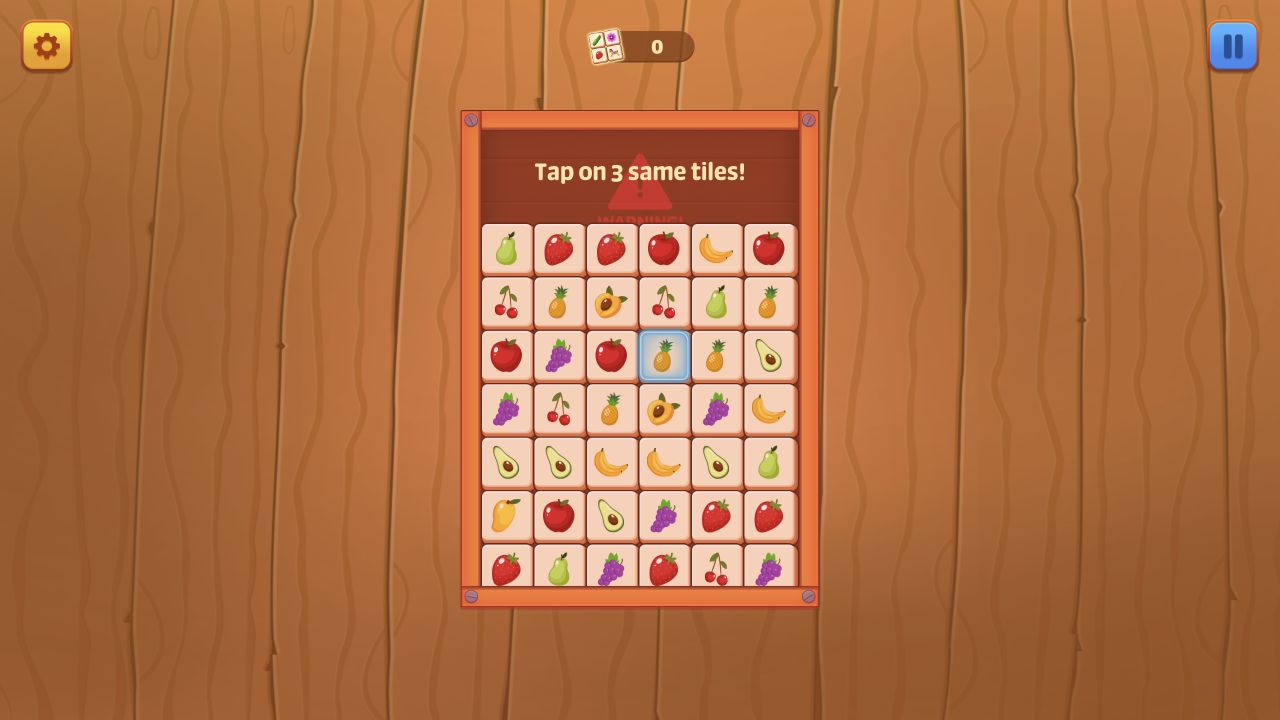
Tile Match represents a tap-to-collect format. Its tutorial asked for three identical tiles, and a click expanded a narrow queue into a six-column fruit grid. That observation supports a practical question: does the game reveal enough of the board for a player to plan, or does it ask for blind selection? It does not support a claim that all tile games are easy or cognitively beneficial.
Robot Unicorn Dash represents a continuous runner. The verified session moved from a menu through a paint-splash transition into a live HUD labeled Jump and Dash; the captured run reached 19. Fruit Merge represents a drop-and-combine board: score began at zero, the container was empty, and the next-fruit preview was visible. These formats differ less by theme than by whether the next decision is about timing or placement.
4–6: aiming, simulation and spatial puzzles
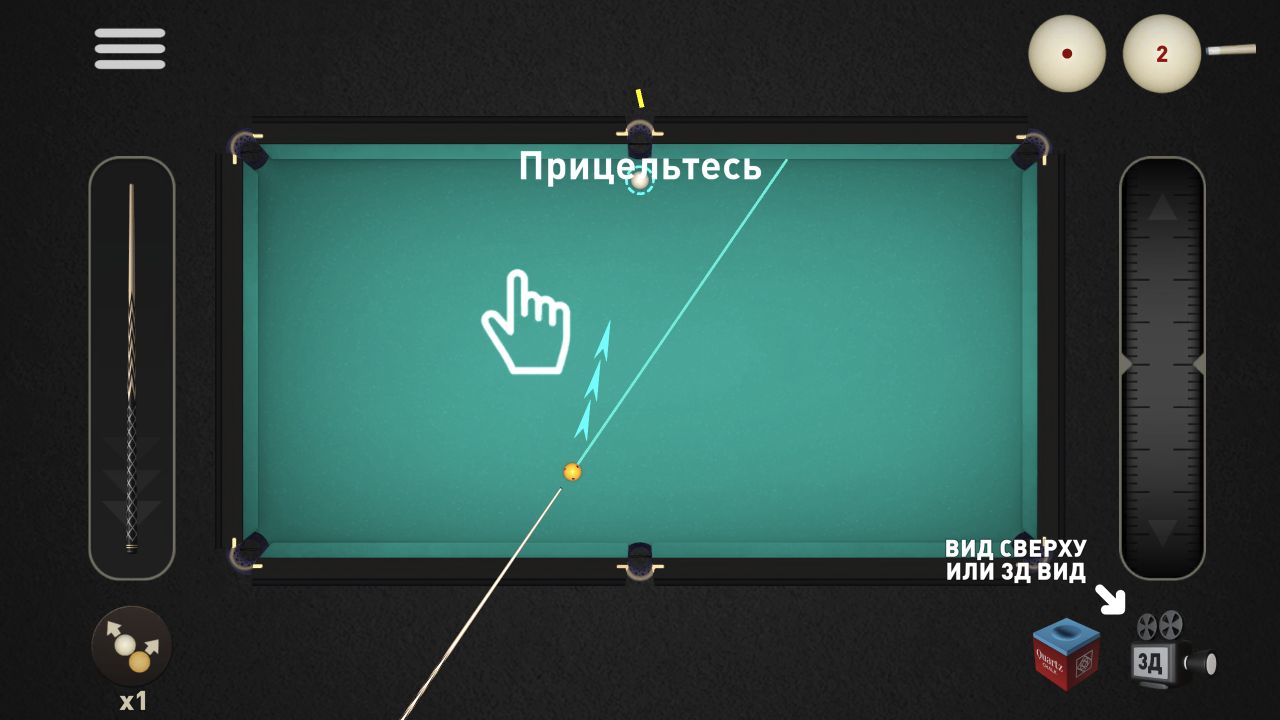
Billiards 3D opened with a cue line, power meter and a Russian-language aiming tutorial. Gas Station Simulator opened with 140 cash, a marked purchase costing 100 and both WASD and mouse-drag movement instructions. One foregrounds direction and power; the other foregrounds navigation and an explicit resource decision. Those opening signals are more useful than broad labels such as sports or simulation.
Spatial puzzles deserve the same treatment. A sliding block, screw, arrow cube or painted corridor may all sit under puzzle, but the meaningful question is what state the first input changes. A strong comparison names that state change. A weak comparison substitutes adjectives such as relaxing, addictive or brain-training without measuring any of them.
7–10: four questions to carry into any format
These questions also cover formats absent from the current evidence set, including verified multiplayer .IO play, clickers and first-person shooters. We do not fill those gaps with remembered genre wisdom. When a matching playtest exists, it can be added to the comparison with its own date, viewport, inputs and limits.
The result is not a ranking of the whole browser-games market. It is a map for choosing what to open next. Readers who want immediate timing feedback can inspect the runner record; readers who prefer visible board state can start with matching or merging; readers who want an explicit resource choice can inspect the simulation record. Every recommendation remains traceable to a page below.
- What does the first accepted input change on screen?
- Does the opening state expose a goal, a resource, a direction or a timing cue?
- Can the player distinguish publisher-supplied claims from the reviewer’s observation?
- Which important properties—mobile behavior, later levels, multiplayer stability or completion time—remain untested?
What the linked records actually contain
Tile Match was tested on 2026-08-13 in Codex in-app Chromium 151.0.7922.76 at 1280×720. The recorded inputs were Close the preroll; Click the center of the game canvas. The visible record says: The opening used a narrow wooden chute rather than a full-width board. The tutorial said to tap three identical tiles. The click expanded the lower queue into a six-column fruit-tile grid with one pineapple highlighted.
Robot Unicorn Dash was tested on 2026-08-13 in Codex in-app Chromium 151.0.7922.76 at 1280×720. The recorded inputs were Click Play Now; Press Space twice during the live run. The visible record says: The menu opened on a blue planet backdrop with a trophy counter at zero. Starting the run transitioned through a paint-splash wipe. The live HUD labeled Jump and Dash and the captured run reached 19.
Fruit Merge: Juicy Drop Game was tested on 2026-08-13 in Codex in-app Chromium 151.0.7922.76 at 1280×720. The recorded inputs were Close the preroll and confirmation; Click the center of the container. The visible record says: The run opened at score 0 with a small orange fruit above an empty container. The next-fruit preview showed a small green fruit. The bottom legend displayed a progression from small berries to pineapple and watermelon.
Billiards 3D: Russian Pyramid was tested on 2026-08-13 in Codex in-app Chromium 151.0.7922.76 at 1280×720. The recorded inputs were Click the opening table; Click once on the aiming tutorial. The visible record says: The live table opened in a Russian-language aiming tutorial. A cue line ran from the yellow cue ball toward the top-middle pocket. Top-view/3D-view controls and a vertical power meter were visible.
Gas Station Simulator was tested on 2026-08-13 in Codex in-app Chromium 151.0.7922.76 at 1280×720. The recorded inputs were Click Let’s Play; Focus the scene and press W. The visible record says: The session loaded into a top-down station forecourt. The tutorial displayed both WASD and mouse-drag movement. Starting cash was 140 and the first marked purchase cost 100.
These records support only the states and inputs described above. They do not establish later-level quality, average session length, mobile behavior, popularity, learning effects or competitive balance unless a separate source or test explicitly covers that question.
References and evidence
- Tile Match — hands-on evidence — Desktop (macOS), Codex in-app Chromium 151.0.7922.76, 1280×720; tested 2026-08-13.
- Robot Unicorn Dash — hands-on evidence — Desktop (macOS), Codex in-app Chromium 151.0.7922.76, 1280×720; tested 2026-08-13.
- Fruit Merge: Juicy Drop Game — hands-on evidence — Desktop (macOS), Codex in-app Chromium 151.0.7922.76, 1280×720; tested 2026-08-13.
- Billiards 3D: Russian Pyramid — hands-on evidence — Desktop (macOS), Codex in-app Chromium 151.0.7922.76, 1280×720; tested 2026-08-13.
- Gas Station Simulator — hands-on evidence — Desktop (macOS), Codex in-app Chromium 151.0.7922.76, 1280×720; tested 2026-08-13.