
A short test and a short game are not the same thing. We can open a puzzle, record its first board and apply a controlled input in a few minutes; that does not prove the level—or the entire game—can be finished in ten. This revised guide keeps the useful part of the original idea: helping a reader choose a puzzle whose opening state is easy to inspect before committing to a longer session.
Five current pages provide the comparison. They were tested on the same date, browser family and viewport, which makes their opening evidence easier to compare. The sessions were not completion trials, and we did not estimate average solving time.
Choose by the kind of state you want to read
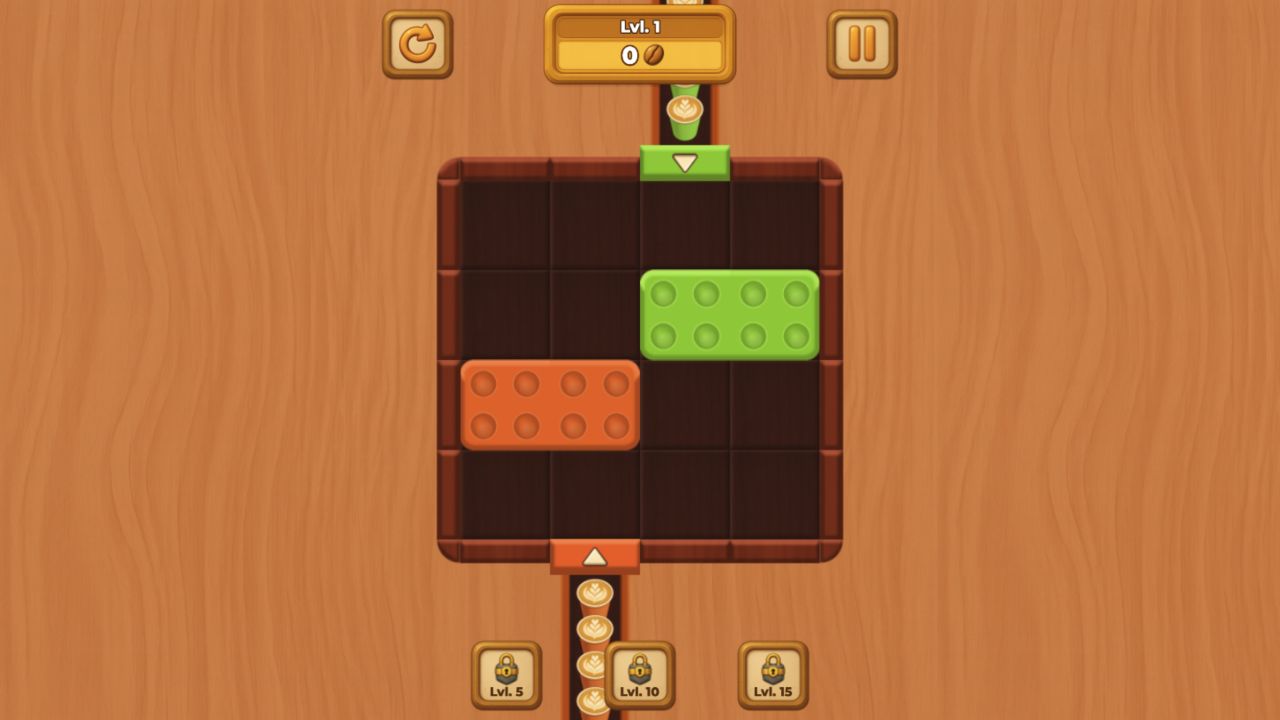
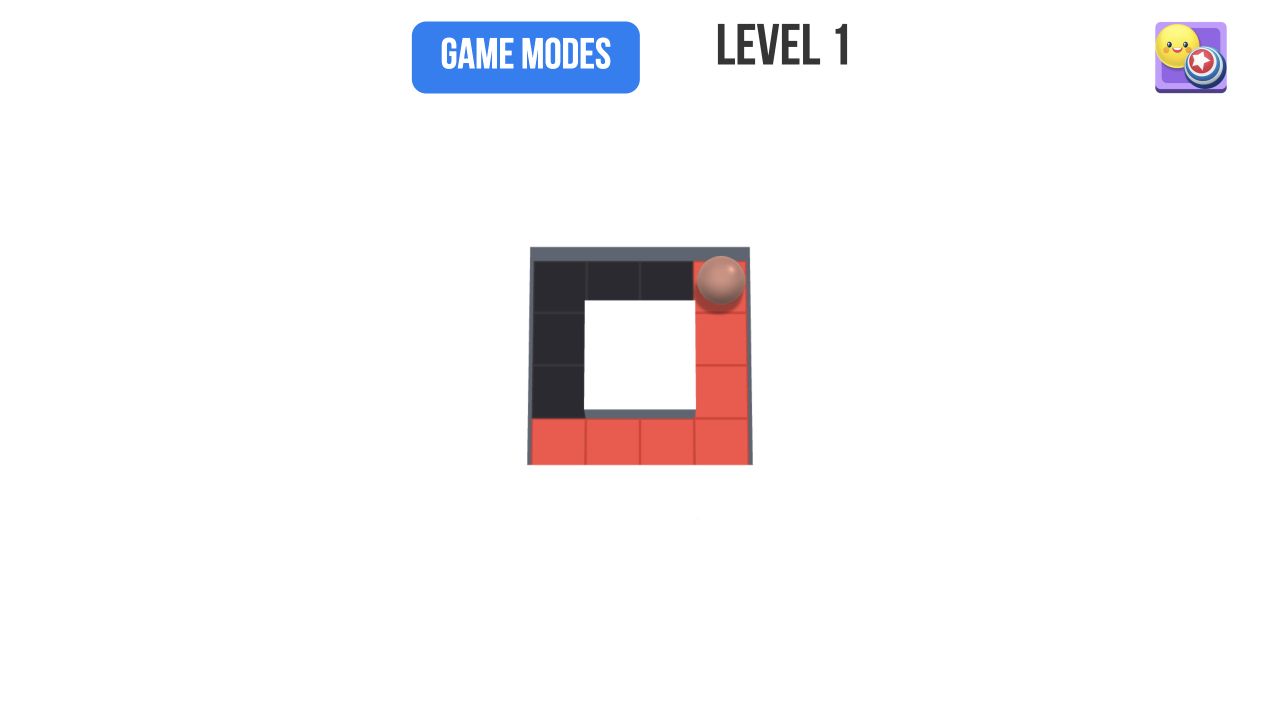
Amaze! opened with an L-shaped corridor around a central void. Right painted the bottom corridor and Up painted the right edge, with each direction carrying the ball to the next wall. That is the clearest verified movement change in this group. Coffee Color Blocks instead showed horizontal pieces and matching edge gates; its first drag dismissed the tutorial hand but did not complete the green exit.
Those two records support different recommendations. Choose Amaze! if you want immediate keyboard movement evidence. Choose Coffee Color Blocks if you want to inspect clearance and direction while accepting that our first drag did not prove the solution.
Collection, removal and dependency
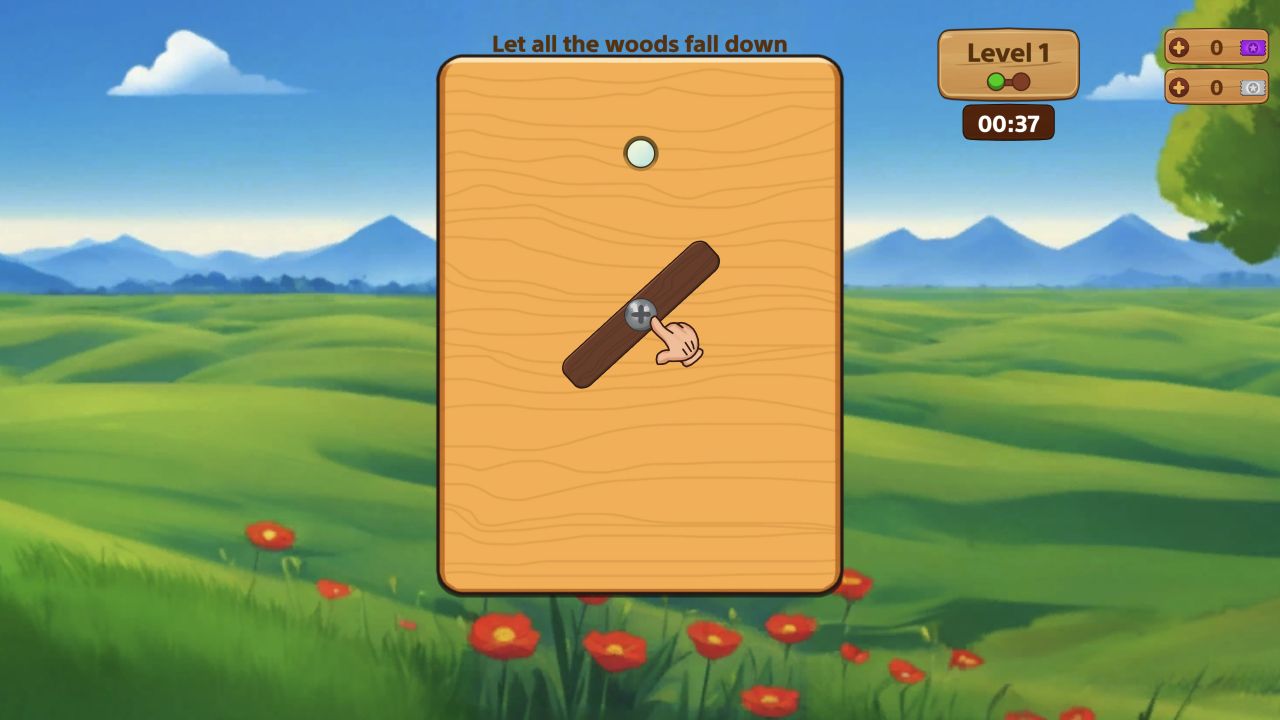
Tile Match transformed a narrow opening queue into a six-column fruit grid after the canvas click. Mahjong Solitaire Zodiac explicitly instructed the player to select two identical exposed tiles around a layered stack. Wood Nuts Master began with a bar, central screw and empty hole; clicking the screw rotated the bar diagonally without removing it.
These are not three skins of the same puzzle. Tile Match emphasizes revealed board information, Mahjong emphasizes which pieces are exposed, and Wood Nuts emphasizes a physical dependency. The screenshots and input notes below let a reader see that distinction without accepting an invented difficulty or time ranking.
A short-session checklist that does not promise a finish
A short break can still contain useful play even if a puzzle is not completed. Reaching a clear board, testing one input and understanding the next decision is a legitimate small session. The article therefore recommends openings, not guaranteed finishes.
- Prefer an opening goal you can restate in one sentence.
- Check whether the first input creates a visible state change.
- Treat a timer as a visible rule, not evidence of average completion time.
- Stop after the first board if the control remains ambiguous; return only when you can test it deliberately.
What the linked records actually contain
Coffee Color Blocks was tested on 2026-08-13 in Codex in-app Chromium 151.0.7922.76 at 1280×720. The recorded inputs were Close the preroll; Drag the green block toward the green gate. The visible record says: Level 1 showed a four-column board with green and orange horizontal blocks. Matching gates sat on opposite edges and no timer was visible. The first drag dismissed the hand prompt but did not send the green block through the gate.
Amaze! was tested on 2026-08-13 in Codex in-app Chromium 151.0.7922.76 at 1280×720. The recorded inputs were Click game canvas; ArrowRight, then ArrowUp. The visible record says: Level 1 opened with an L-shaped corridor around a central void. Right painted the bottom corridor and Up painted the right edge. Each direction carried the ball to the next wall rather than one square.
Tile Match was tested on 2026-08-13 in Codex in-app Chromium 151.0.7922.76 at 1280×720. The recorded inputs were Close the preroll; Click the center of the game canvas. The visible record says: The opening used a narrow wooden chute rather than a full-width board. The tutorial said to tap three identical tiles. The click expanded the lower queue into a six-column fruit-tile grid with one pineapple highlighted.
Wood Nuts Master: Screw Puzzle was tested on 2026-08-13 in Codex in-app Chromium 151.0.7922.76 at 1280×720. The recorded inputs were Close the preroll; Click the central screw. The visible record says: The objective read ‘Let all the woods fall down’ and the timer started at 00:55. The opening obstacle was a narrow dark bar with a central screw and an empty hole above. Clicking the center rotated the bar from horizontal to diagonal without removing the screw.
Mahjong Solitaire Zodiac was tested on 2026-08-13 in Codex in-app Chromium 151.0.7922.76 at 1280×720. The recorded inputs were Close the preroll; Click two exposed tiles in the tutorial stack. The visible record says: The first layout was a compact layered stack over a ram illustration. The instruction explicitly said to tap two identical tiles to remove them. Only the outermost uncovered tiles were visually available around the stack.
These records support only the states and inputs described above. They do not establish later-level quality, average session length, mobile behavior, popularity, learning effects or competitive balance unless a separate source or test explicitly covers that question.
References and evidence
- Coffee Color Blocks — hands-on evidence — Desktop (macOS), Codex in-app Chromium 151.0.7922.76, 1280×720; tested 2026-08-13.
- Amaze! — hands-on evidence — Desktop (macOS), Codex in-app Chromium 151.0.7922.76, 1280×720; tested 2026-08-13.
- Tile Match — hands-on evidence — Desktop (macOS), Codex in-app Chromium 151.0.7922.76, 1280×720; tested 2026-08-13.
- Wood Nuts Master: Screw Puzzle — hands-on evidence — Desktop (macOS), Codex in-app Chromium 151.0.7922.76, 1280×720; tested 2026-08-13.
- Mahjong Solitaire Zodiac — hands-on evidence — Desktop (macOS), Codex in-app Chromium 151.0.7922.76, 1280×720; tested 2026-08-13.