
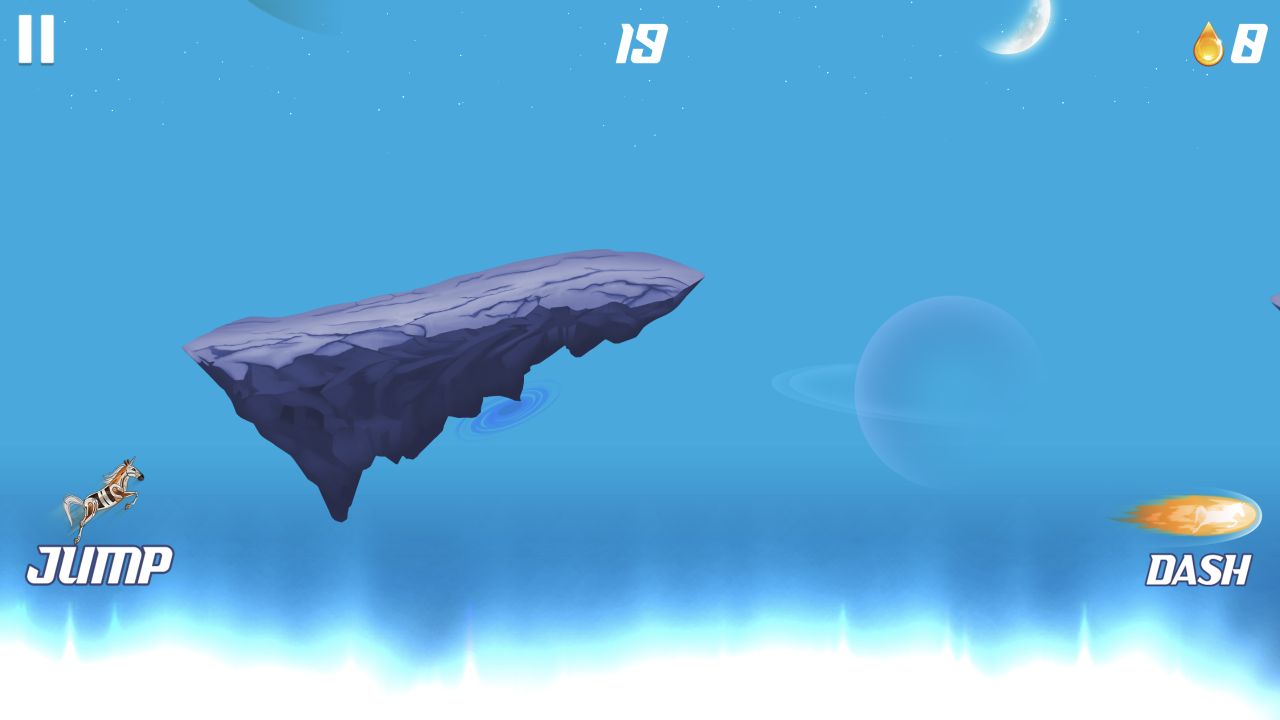
Fast feedback can be observed; faster reflexes require measurement. Our evidence records only the first part. Robot Unicorn Dash exposed Jump and Dash during a live run. Balls: Ricochet changed score and board state after a straight shot. Super Frog Adventure reached a timed scene, but our discrete key sequence did not produce clearly visible traversal.
That mixture is useful because it prevents a top-games list from hiding unresolved controls. A title belongs in an input-feedback comparison only when the recorded action and visible result can be stated together.
A clean feedback test
Players seeking a responsive opening can inspect Robot Unicorn Dash and Balls: Ricochet through the linked records. That recommendation concerns the tested feedback loop. It does not establish training value, long-term challenge or competitive skill transfer.
- Capture the state immediately before input.
- Apply one named input rather than a burst of improvisation.
- Look for position, score, animation or HUD change tied to that input.
- Record no clear result when the change cannot be distinguished.
What the linked records actually contain
Robot Unicorn Dash was tested on 2026-08-13 in Codex in-app Chromium 151.0.7922.76 at 1280×720. The recorded inputs were Click Play Now; Press Space twice during the live run. The visible record says: The menu opened on a blue planet backdrop with a trophy counter at zero. Starting the run transitioned through a paint-splash wipe. The live HUD labeled Jump and Dash and the captured run reached 19.
Balls: Ricochet! was tested on 2026-08-13 in Codex in-app Chromium 151.0.7922.76 at 1280×720. The recorded inputs were ArrowUp and Enter from the menu; Click the center of the live field. The visible record says: The first field began with one white ball and a yellow block marked 2. The initial HUD showed score 0, stars 0, and a 1× shot indicator. The first straight shot changed the score to 1 and added a block marked 1.
Super Frog Adventure was tested on 2026-08-13 in Codex in-app Chromium 151.0.7922.76 at 1280×720. The recorded inputs were Click the canvas; Press ArrowRight repeatedly, then ArrowUp. The visible record says: The first scene opened with four hearts, a 0/3 fruit counter, and a 196-second timer. Tutorial panels labeled horizontal movement and jumping. Discrete key presses did not produce a clearly visible traversal while the timer continued.
These records support only the states and inputs described above. They do not establish later-level quality, average session length, mobile behavior, popularity, learning effects or competitive balance unless a separate source or test explicitly covers that question.
References and evidence
- Robot Unicorn Dash — hands-on evidence — Desktop (macOS), Codex in-app Chromium 151.0.7922.76, 1280×720; tested 2026-08-13.
- Balls: Ricochet! — hands-on evidence — Desktop (macOS), Codex in-app Chromium 151.0.7922.76, 1280×720; tested 2026-08-13.
- Super Frog Adventure — hands-on evidence — Desktop (macOS), Codex in-app Chromium 151.0.7922.76, 1280×720; tested 2026-08-13.