
A good .IO review needs a live multiplayer state. The current public collection has none, so fulegames cannot honestly rank .IO games or describe their populations. This page publishes the gate a future candidate must pass.
The first record must identify displayed region, lobby state, apparent human or bot labeling, join time and the exact input that changes shared state. A second pass must check reconnect or persistence before the review mentions either.
Required evidence
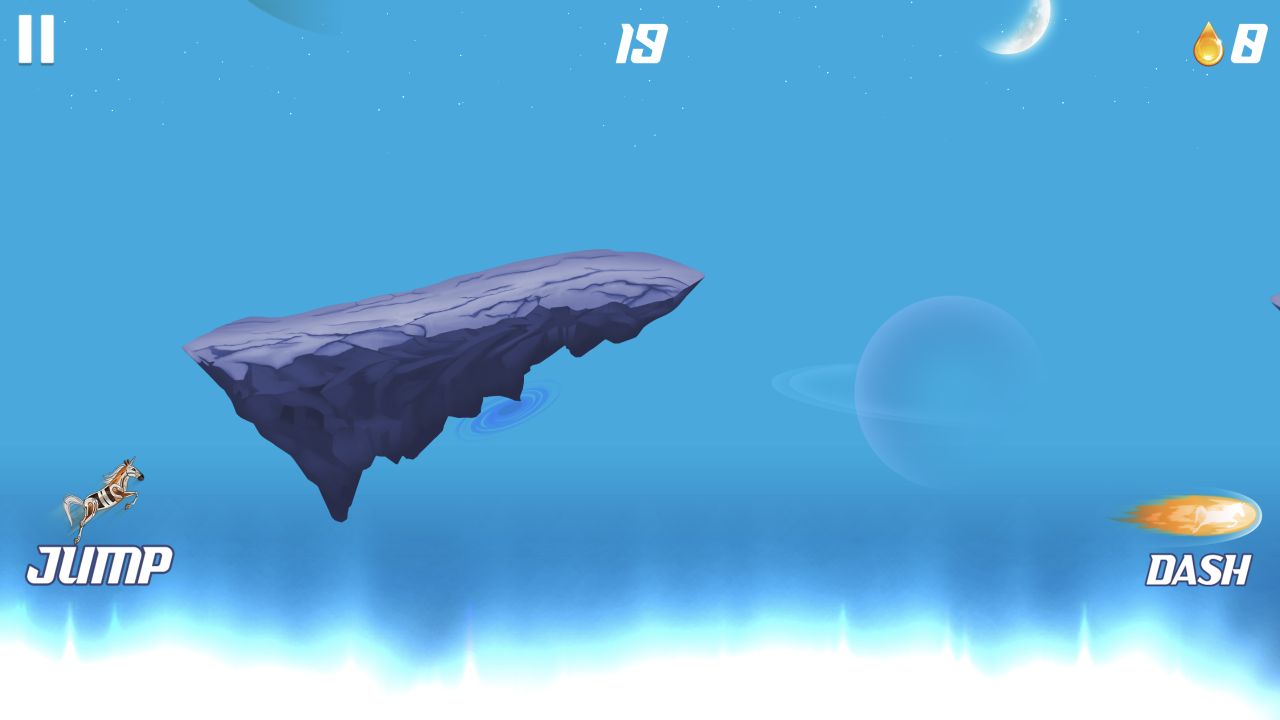
Robot Unicorn Dash and Balls: Ricochet are not .IO games; they appear below only as examples of the current evidence format. Each connects input to visible state. A future multiplayer record must meet that standard and add the network context unique to live play.
- A dated lobby screenshot with region and queue information.
- A live-state screenshot after a reproducible movement or action.
- Latency described only with a measurement and location.
- No permanent thriving or dead label from one session.
- No strategy claim before the same interaction is repeated.
What the linked records actually contain
Robot Unicorn Dash was tested on 2026-08-13 in Codex in-app Chromium 151.0.7922.76 at 1280×720. The recorded inputs were Click Play Now; Press Space twice during the live run. The visible record says: The menu opened on a blue planet backdrop with a trophy counter at zero. Starting the run transitioned through a paint-splash wipe. The live HUD labeled Jump and Dash and the captured run reached 19.
Balls: Ricochet! was tested on 2026-08-13 in Codex in-app Chromium 151.0.7922.76 at 1280×720. The recorded inputs were ArrowUp and Enter from the menu; Click the center of the live field. The visible record says: The first field began with one white ball and a yellow block marked 2. The initial HUD showed score 0, stars 0, and a 1× shot indicator. The first straight shot changed the score to 1 and added a block marked 1.
These records support only the states and inputs described above. They do not establish later-level quality, average session length, mobile behavior, popularity, learning effects or competitive balance unless a separate source or test explicitly covers that question.
References and evidence
- Robot Unicorn Dash — hands-on evidence — Desktop (macOS), Codex in-app Chromium 151.0.7922.76, 1280×720; tested 2026-08-13.
- Balls: Ricochet! — hands-on evidence — Desktop (macOS), Codex in-app Chromium 151.0.7922.76, 1280×720; tested 2026-08-13.