
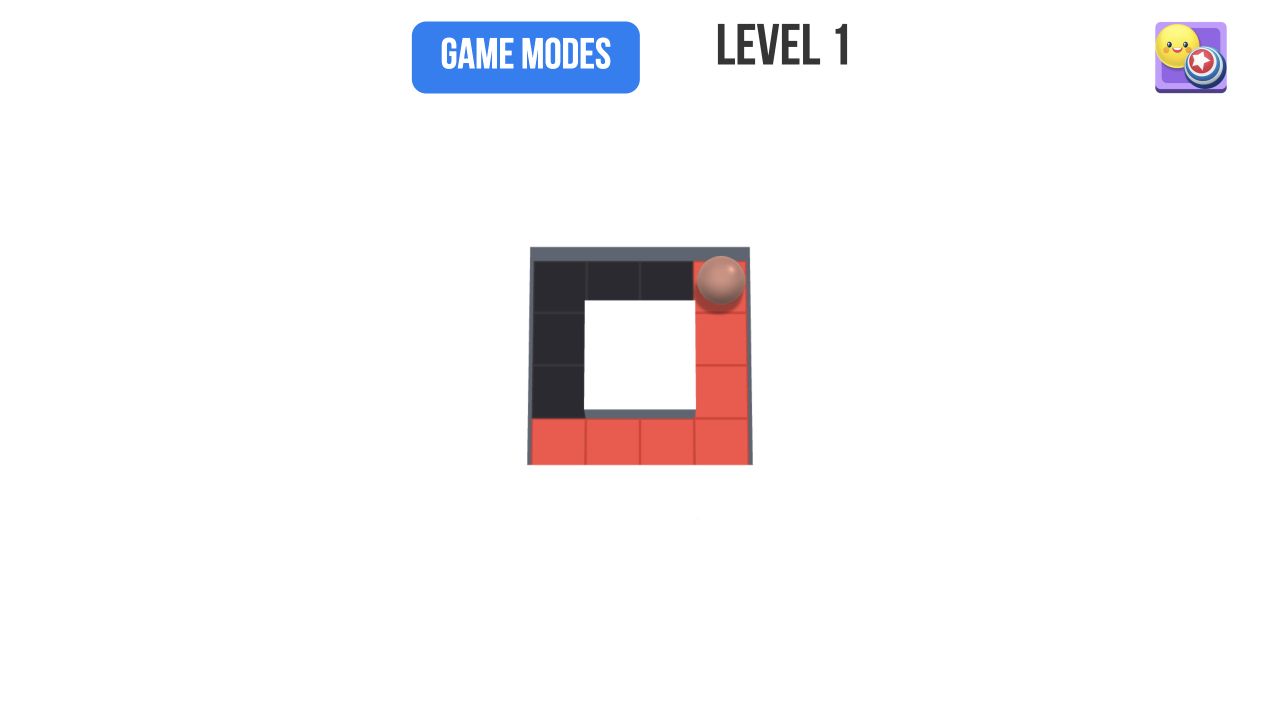
Presentation is visible in a screenshot; control quality is not. That is why fulegames records an input before publishing control advice. Amaze! produced a clear two-step result: Right painted the bottom corridor and Up painted the right edge. Coffee Color Blocks accepted enough of a drag to dismiss its tutorial hand but did not complete the exit. Super Frog Adventure displayed movement instructions while our discrete keys produced no clearly visible traversal.
Together these outcomes are more informative than a polished thumbnail. They show success, partial response and unresolved response without forcing all three into a positive recommendation.
The control-first rule
This method does not prove that graphics are unimportant. It prevents visual appeal from being mistaken for responsiveness. Readers can inspect the linked records and decide how much each factor matters to them.
- Name the input exactly.
- Describe the pre-input state.
- Record the visible change or lack of change.
- Avoid later-level advice until the action repeats reliably.
What the linked records actually contain
Amaze! was tested on 2026-08-13 in Codex in-app Chromium 151.0.7922.76 at 1280×720. The recorded inputs were Click game canvas; ArrowRight, then ArrowUp. The visible record says: Level 1 opened with an L-shaped corridor around a central void. Right painted the bottom corridor and Up painted the right edge. Each direction carried the ball to the next wall rather than one square.
Coffee Color Blocks was tested on 2026-08-13 in Codex in-app Chromium 151.0.7922.76 at 1280×720. The recorded inputs were Close the preroll; Drag the green block toward the green gate. The visible record says: Level 1 showed a four-column board with green and orange horizontal blocks. Matching gates sat on opposite edges and no timer was visible. The first drag dismissed the hand prompt but did not send the green block through the gate.
Super Frog Adventure was tested on 2026-08-13 in Codex in-app Chromium 151.0.7922.76 at 1280×720. The recorded inputs were Click the canvas; Press ArrowRight repeatedly, then ArrowUp. The visible record says: The first scene opened with four hearts, a 0/3 fruit counter, and a 196-second timer. Tutorial panels labeled horizontal movement and jumping. Discrete key presses did not produce a clearly visible traversal while the timer continued.
These records support only the states and inputs described above. They do not establish later-level quality, average session length, mobile behavior, popularity, learning effects or competitive balance unless a separate source or test explicitly covers that question.
References and evidence
- Amaze! — hands-on evidence — Desktop (macOS), Codex in-app Chromium 151.0.7922.76, 1280×720; tested 2026-08-13.
- Coffee Color Blocks — hands-on evidence — Desktop (macOS), Codex in-app Chromium 151.0.7922.76, 1280×720; tested 2026-08-13.
- Super Frog Adventure — hands-on evidence — Desktop (macOS), Codex in-app Chromium 151.0.7922.76, 1280×720; tested 2026-08-13.