
A short break is enough to inspect an action game, but not necessarily enough to finish it. That difference keeps this guide honest. We compare how quickly four titles communicate a live state and a next input. We do not publish average run lengths, progression claims or difficulty curves because those were not measured.
The useful outcome of a brief check-in is a decision: continue now, save the game for a longer session, or leave because the control remains unclear. That decision can be grounded in the opening screen rather than a generic promise that every action game is ideal for five minutes.
For immediate timing feedback: Robot Unicorn Dash
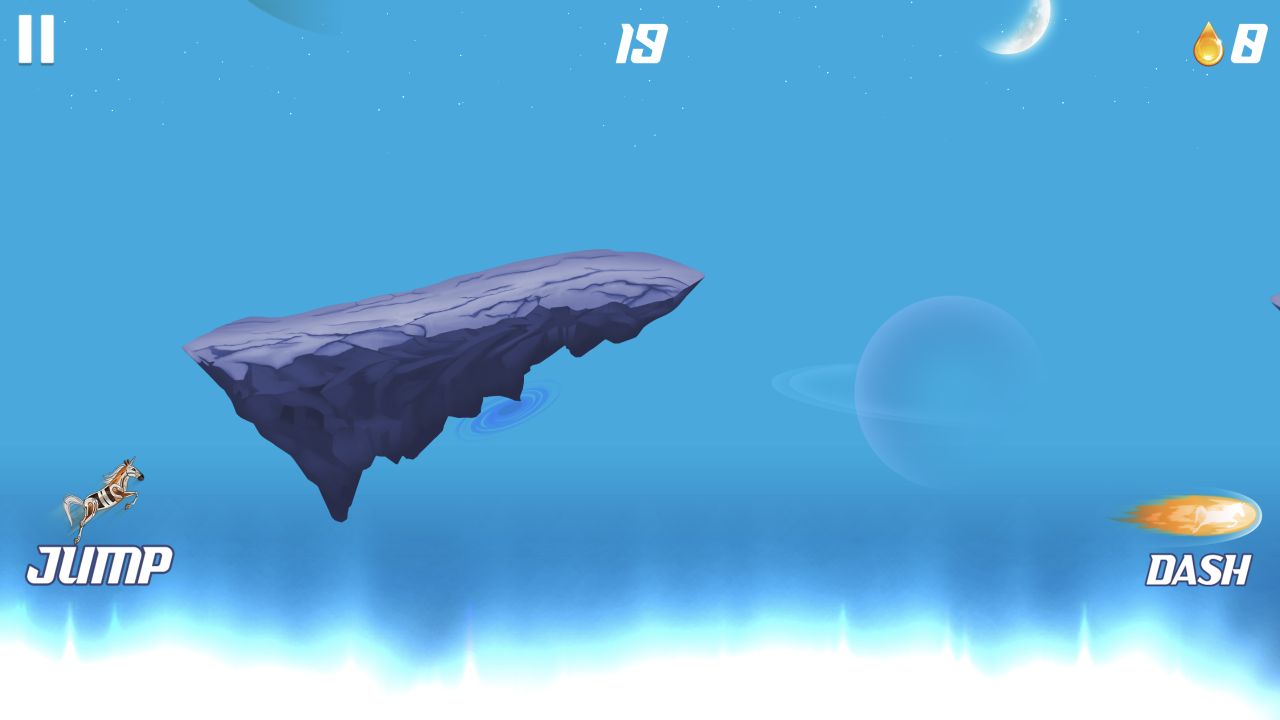
Robot Unicorn Dash moved from Play Now through a paint-splash transition into a live run. The HUD labeled Jump and Dash, and the captured run reached 19 after two Space inputs. This supports saying that the desktop opening exposes a compact action vocabulary and visible run state.
It does not tell us the typical run duration, later obstacle variety or whether the same inputs work comfortably on mobile. For a short check-in, it is enough to verify that the live state appears and that the intended actions are named.
For board-state feedback: Balls: Ricochet!
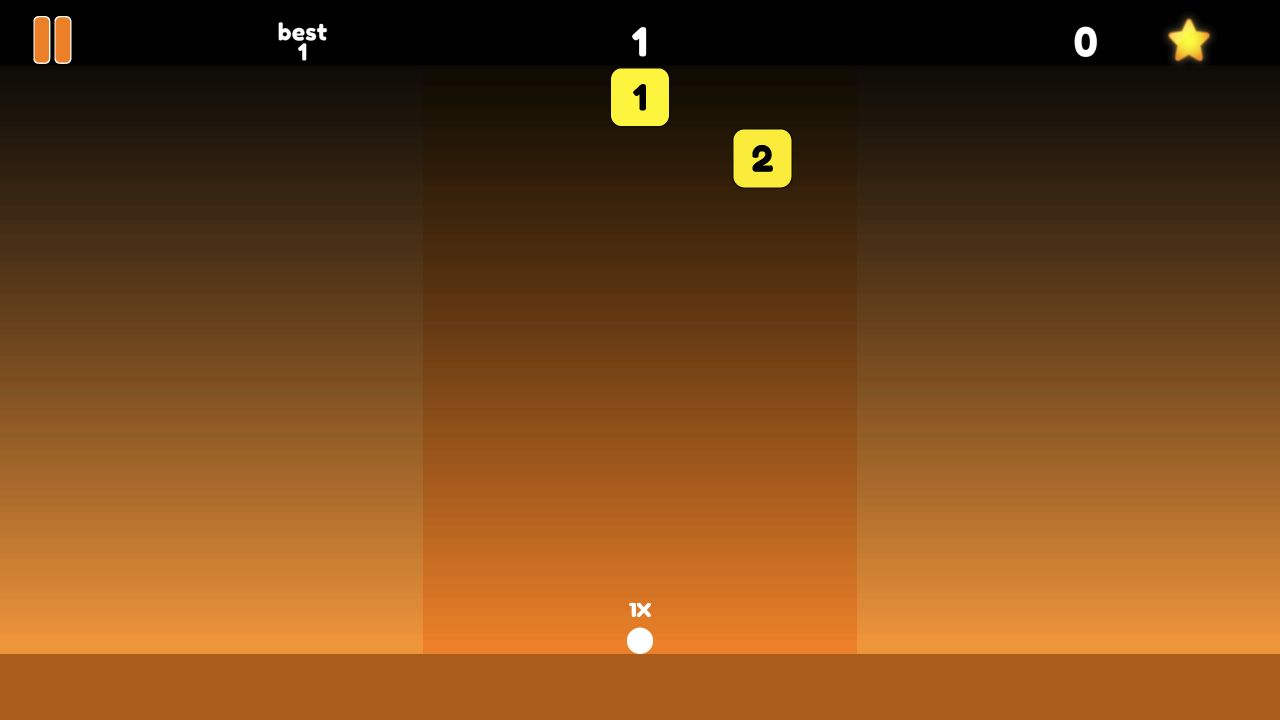
Balls: Ricochet offers action through a still field rather than continuous movement. The first straight shot increased score from zero to one and added a numbered block. That makes the outcome easy to compare against the baseline even though we did not complete the board.
Super Frog Adventure shows why an unresolved result also belongs in a guide. Its scene loaded with hearts, fruit count and a running timer, but the discrete direction inputs did not produce clearly visible traversal in our pass. We can recommend a retest, not pretend the control was verified.
A two-minute inspection protocol
Build a Rollercoaster demonstrates another boundary: the avatar reached a live scene with a shop objective and resource HUD, but the opening evidence does not establish construction or action pacing. Short sessions are valuable when they answer a small question. They become misleading when a small answer is stretched into a full review.
- Reach gameplay rather than judging the menu or preroll.
- Write down the visible goal, counters and control labels.
- Apply one reproducible input and look for a specific state change.
- If the result is unclear, stop and preserve the uncertainty instead of adding advice.
What the linked records actually contain
Robot Unicorn Dash was tested on 2026-08-13 in Codex in-app Chromium 151.0.7922.76 at 1280×720. The recorded inputs were Click Play Now; Press Space twice during the live run. The visible record says: The menu opened on a blue planet backdrop with a trophy counter at zero. Starting the run transitioned through a paint-splash wipe. The live HUD labeled Jump and Dash and the captured run reached 19.
Super Frog Adventure was tested on 2026-08-13 in Codex in-app Chromium 151.0.7922.76 at 1280×720. The recorded inputs were Click the canvas; Press ArrowRight repeatedly, then ArrowUp. The visible record says: The first scene opened with four hearts, a 0/3 fruit counter, and a 196-second timer. Tutorial panels labeled horizontal movement and jumping. Discrete key presses did not produce a clearly visible traversal while the timer continued.
Balls: Ricochet! was tested on 2026-08-13 in Codex in-app Chromium 151.0.7922.76 at 1280×720. The recorded inputs were ArrowUp and Enter from the menu; Click the center of the live field. The visible record says: The first field began with one white ball and a yellow block marked 2. The initial HUD showed score 0, stars 0, and a 1× shot indicator. The first straight shot changed the score to 1 and added a block marked 1.
Build a Rollercoaster: Simulator was tested on 2026-08-13 in Codex in-app Chromium 151.0.7922.76 at 1280×720. The recorded inputs were Close the preroll; Focus the game and press W. The visible record says: The avatar spawned beside a red floor button and an Income sign. The opening objective was to get closer to the block shop. The HUD started at 75 coins and zero diamonds.
These records support only the states and inputs described above. They do not establish later-level quality, average session length, mobile behavior, popularity, learning effects or competitive balance unless a separate source or test explicitly covers that question.
References and evidence
- Robot Unicorn Dash — hands-on evidence — Desktop (macOS), Codex in-app Chromium 151.0.7922.76, 1280×720; tested 2026-08-13.
- Super Frog Adventure — hands-on evidence — Desktop (macOS), Codex in-app Chromium 151.0.7922.76, 1280×720; tested 2026-08-13.
- Balls: Ricochet! — hands-on evidence — Desktop (macOS), Codex in-app Chromium 151.0.7922.76, 1280×720; tested 2026-08-13.
- Build a Rollercoaster: Simulator — hands-on evidence — Desktop (macOS), Codex in-app Chromium 151.0.7922.76, 1280×720; tested 2026-08-13.