
Twenty games are enough to describe this collection and far too few to forecast an industry. Within the current set, three opening patterns recur: tutorials point directly at the first action, goals are exposed through compact HUD information, and one input often reveals more of the board or live state.
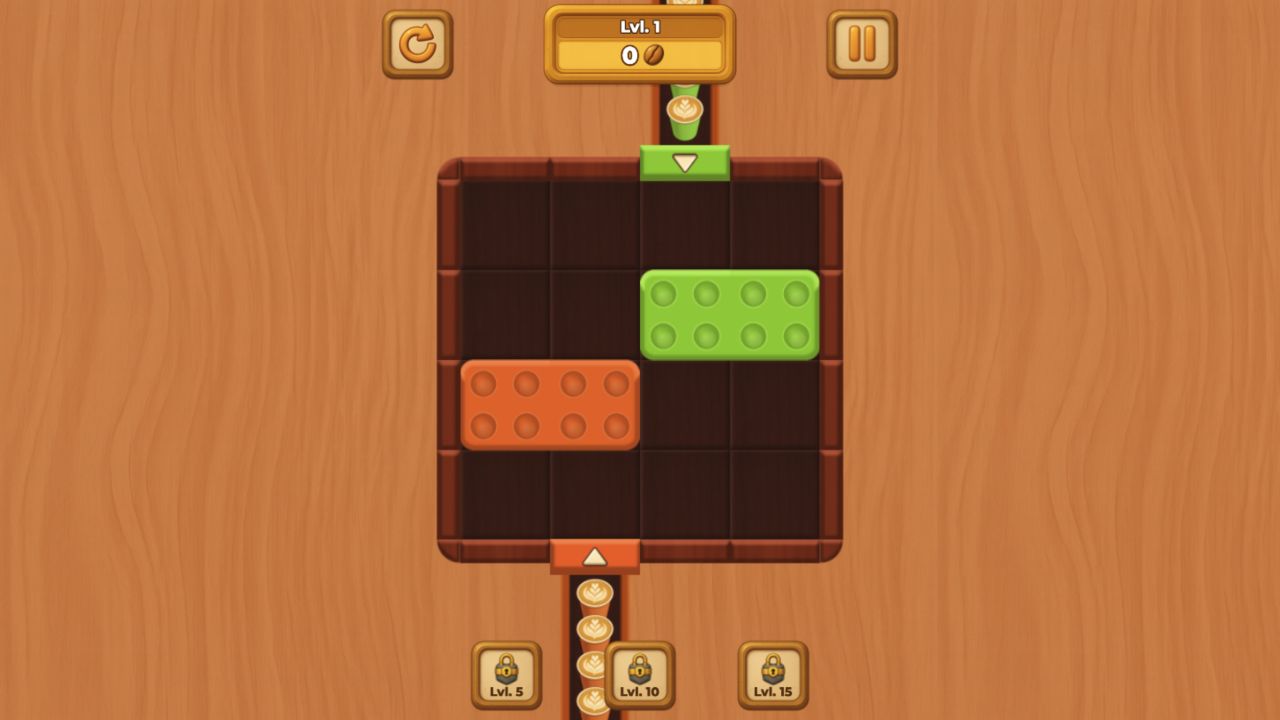
Coffee Color Blocks used a hand prompt; Gas Station displayed movement and a marked purchase; Tile Match expanded its board after a click; Robot Unicorn Dash labeled two live actions. These are sample observations, not proof that all browser games are becoming shorter or denser.
How the pattern can be tested
As the evidence set grows, fulegames can rerun the same definitions and report whether the proportions changed. Until then, this page is a transparent snapshot of twenty retained titles in August 2026.
- Count only games with a dated live-state record.
- Define each pattern before counting it.
- Publish the sample size and excluded titles.
- Do not convert a catalog pattern into a market-growth claim.
What the linked records actually contain
Coffee Color Blocks was tested on 2026-08-13 in Codex in-app Chromium 151.0.7922.76 at 1280×720. The recorded inputs were Close the preroll; Drag the green block toward the green gate. The visible record says: Level 1 showed a four-column board with green and orange horizontal blocks. Matching gates sat on opposite edges and no timer was visible. The first drag dismissed the hand prompt but did not send the green block through the gate.
Gas Station Simulator was tested on 2026-08-13 in Codex in-app Chromium 151.0.7922.76 at 1280×720. The recorded inputs were Click Let’s Play; Focus the scene and press W. The visible record says: The session loaded into a top-down station forecourt. The tutorial displayed both WASD and mouse-drag movement. Starting cash was 140 and the first marked purchase cost 100.
Tile Match was tested on 2026-08-13 in Codex in-app Chromium 151.0.7922.76 at 1280×720. The recorded inputs were Close the preroll; Click the center of the game canvas. The visible record says: The opening used a narrow wooden chute rather than a full-width board. The tutorial said to tap three identical tiles. The click expanded the lower queue into a six-column fruit-tile grid with one pineapple highlighted.
Robot Unicorn Dash was tested on 2026-08-13 in Codex in-app Chromium 151.0.7922.76 at 1280×720. The recorded inputs were Click Play Now; Press Space twice during the live run. The visible record says: The menu opened on a blue planet backdrop with a trophy counter at zero. Starting the run transitioned through a paint-splash wipe. The live HUD labeled Jump and Dash and the captured run reached 19.
These records support only the states and inputs described above. They do not establish later-level quality, average session length, mobile behavior, popularity, learning effects or competitive balance unless a separate source or test explicitly covers that question.
References and evidence
- Coffee Color Blocks — hands-on evidence — Desktop (macOS), Codex in-app Chromium 151.0.7922.76, 1280×720; tested 2026-08-13.
- Gas Station Simulator — hands-on evidence — Desktop (macOS), Codex in-app Chromium 151.0.7922.76, 1280×720; tested 2026-08-13.
- Tile Match — hands-on evidence — Desktop (macOS), Codex in-app Chromium 151.0.7922.76, 1280×720; tested 2026-08-13.
- Robot Unicorn Dash — hands-on evidence — Desktop (macOS), Codex in-app Chromium 151.0.7922.76, 1280×720; tested 2026-08-13.