
Casual and hardcore are often used as identities, but they are too vague for choosing what to open next. A more useful question is concrete: what kind of next decision does this opening ask from you? The answer can be inspected on screen. It does not require a claim about personality, attention span or what a player’s brain supposedly wants.
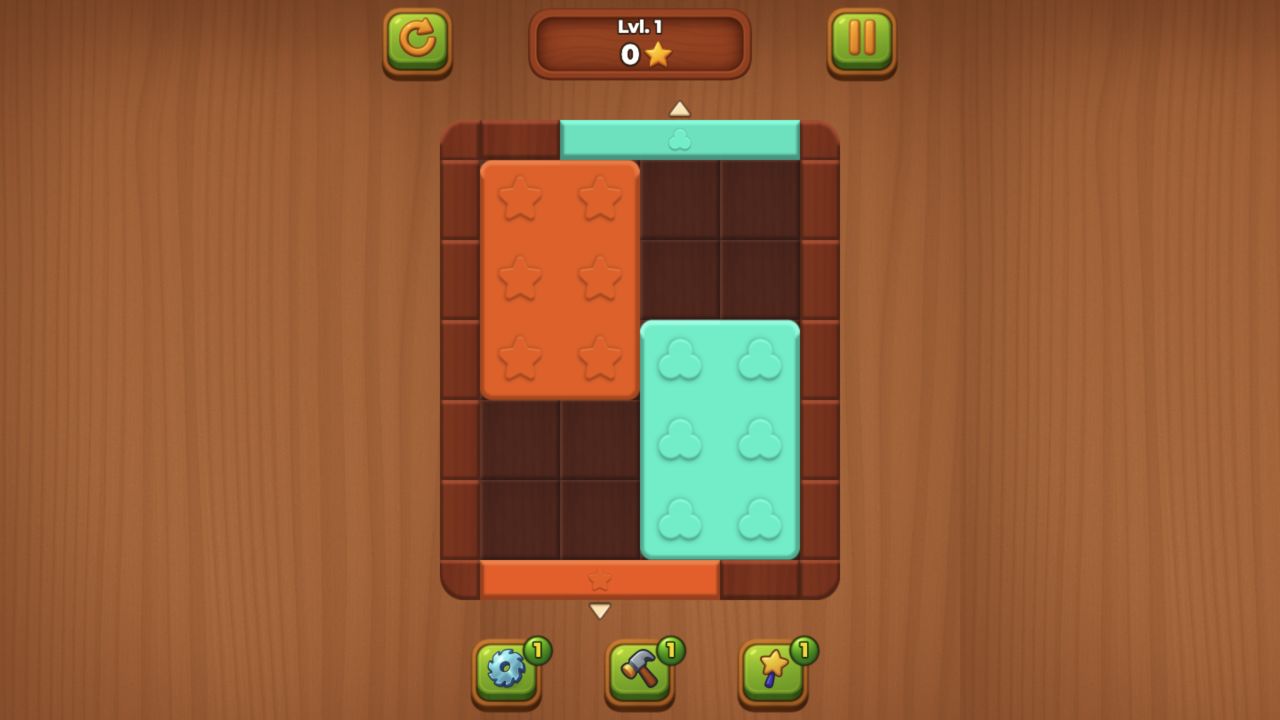
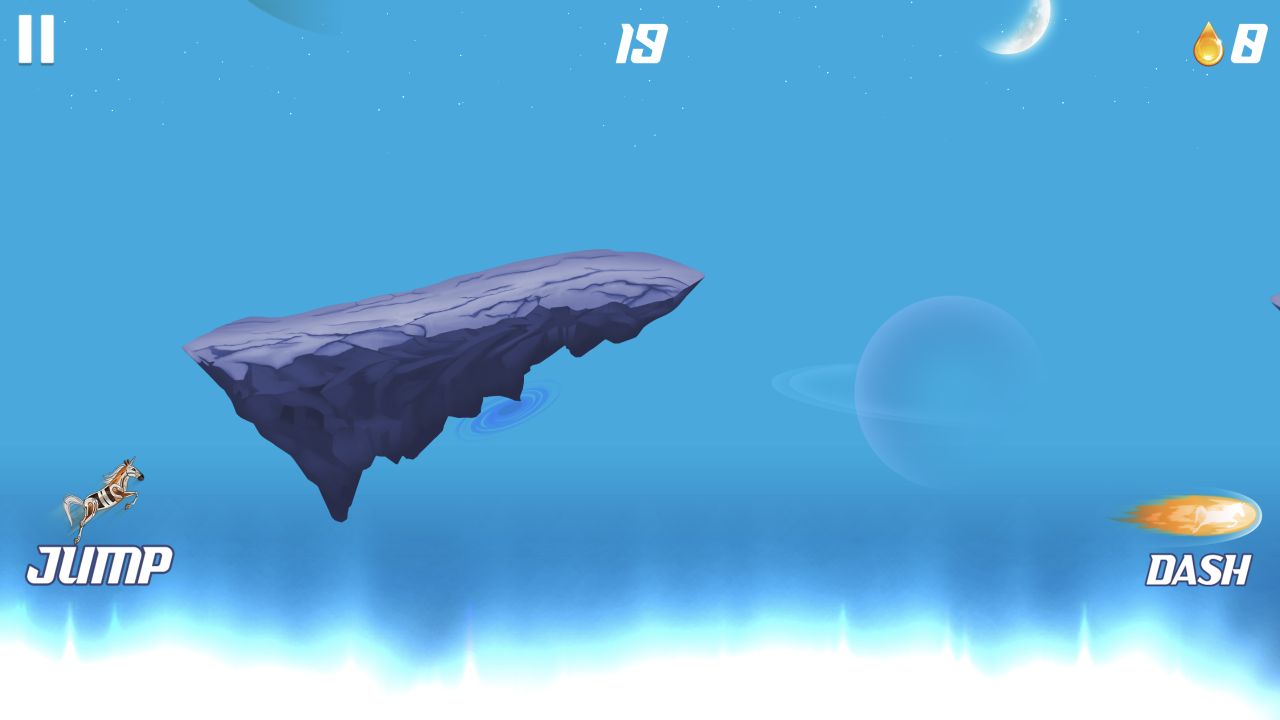
The current evidence set offers four contrasting openings. Wood Blocks Jam showed two tall colored blocks, matching exits, no visible timer and three booster buttons. Amaze! showed a corridor where a direction carried the ball until the next wall. Gas Station Simulator combined movement instructions with a starting resource and marked purchase. Robot Unicorn Dash exposed Jump and Dash during a live run.
Low immediate pressure is not the same as easy
Wood Blocks Jam had no timer visible in the recorded first board. That supports saying the opening did not display time pressure. It does not prove later boards are relaxed or easy. Amaze! accepted two directions with clear visual results, but a readable control can still lead to demanding route planning later. The distinction keeps an opening description honest.
If you want a quieter start, look for a board that remains still while you inspect it. If you want immediate motion, choose a title where the first input starts or changes a live sequence. These are preferences for the next few minutes, not permanent categories of player.
Decision density is visible before difficulty is known
Gas Station Simulator placed movement, cash and a purchase marker on the opening screen. Even without playing long enough to judge its economy, we can see several kinds of information competing for attention. Robot Unicorn Dash reduced the live control language to Jump and Dash while motion continued. One opening asks the player to orient and choose; the other asks the player to time.
Neither structure is inherently more serious. A two-button runner can become demanding through timing, while a simulation can allow slow inspection. We therefore avoid using interface complexity as a substitute for difficulty evidence.
Make a reversible choice
This framework replaces casual versus hardcore with inspect, time, route or allocate. Those verbs are observable, useful and easy to revisit. They also make recommendations more precise: the linked evidence pages show why each title received its verb and which parts of the experience remain unknown.
- For a still board, identify the goal and one legal move before acting.
- For a live sequence, identify the labeled controls and test one at a safe moment.
- For a resource screen, distinguish starting balance from score and purchase cost.
- If the opening does not match the kind of decision you wanted, leave without turning that mismatch into a verdict on the whole game.
What the linked records actually contain
Wood Blocks Jam was tested on 2026-08-13 in Codex in-app Chromium 151.0.7922.76 at 1280×720. The recorded inputs were Close the preroll; Click the tutorial hand on the board. The visible record says: Level 1 showed a tall orange block at left and a tall mint block at lower-right. Mint and orange exits were placed at the top and bottom edges. The board had no timer and three booster buttons were visible.
Amaze! was tested on 2026-08-13 in Codex in-app Chromium 151.0.7922.76 at 1280×720. The recorded inputs were Click game canvas; ArrowRight, then ArrowUp. The visible record says: Level 1 opened with an L-shaped corridor around a central void. Right painted the bottom corridor and Up painted the right edge. Each direction carried the ball to the next wall rather than one square.
Gas Station Simulator was tested on 2026-08-13 in Codex in-app Chromium 151.0.7922.76 at 1280×720. The recorded inputs were Click Let’s Play; Focus the scene and press W. The visible record says: The session loaded into a top-down station forecourt. The tutorial displayed both WASD and mouse-drag movement. Starting cash was 140 and the first marked purchase cost 100.
Robot Unicorn Dash was tested on 2026-08-13 in Codex in-app Chromium 151.0.7922.76 at 1280×720. The recorded inputs were Click Play Now; Press Space twice during the live run. The visible record says: The menu opened on a blue planet backdrop with a trophy counter at zero. Starting the run transitioned through a paint-splash wipe. The live HUD labeled Jump and Dash and the captured run reached 19.
These records support only the states and inputs described above. They do not establish later-level quality, average session length, mobile behavior, popularity, learning effects or competitive balance unless a separate source or test explicitly covers that question.
References and evidence
- Wood Blocks Jam — hands-on evidence — Desktop (macOS), Codex in-app Chromium 151.0.7922.76, 1280×720; tested 2026-08-13.
- Amaze! — hands-on evidence — Desktop (macOS), Codex in-app Chromium 151.0.7922.76, 1280×720; tested 2026-08-13.
- Gas Station Simulator — hands-on evidence — Desktop (macOS), Codex in-app Chromium 151.0.7922.76, 1280×720; tested 2026-08-13.
- Robot Unicorn Dash — hands-on evidence — Desktop (macOS), Codex in-app Chromium 151.0.7922.76, 1280×720; tested 2026-08-13.