
A puzzle journal can make play more deliberate, but fulegames has not measured whether it improves cognition. The modest goal is documentation: notice a recurring board relationship, write it down and compare it with the next session.
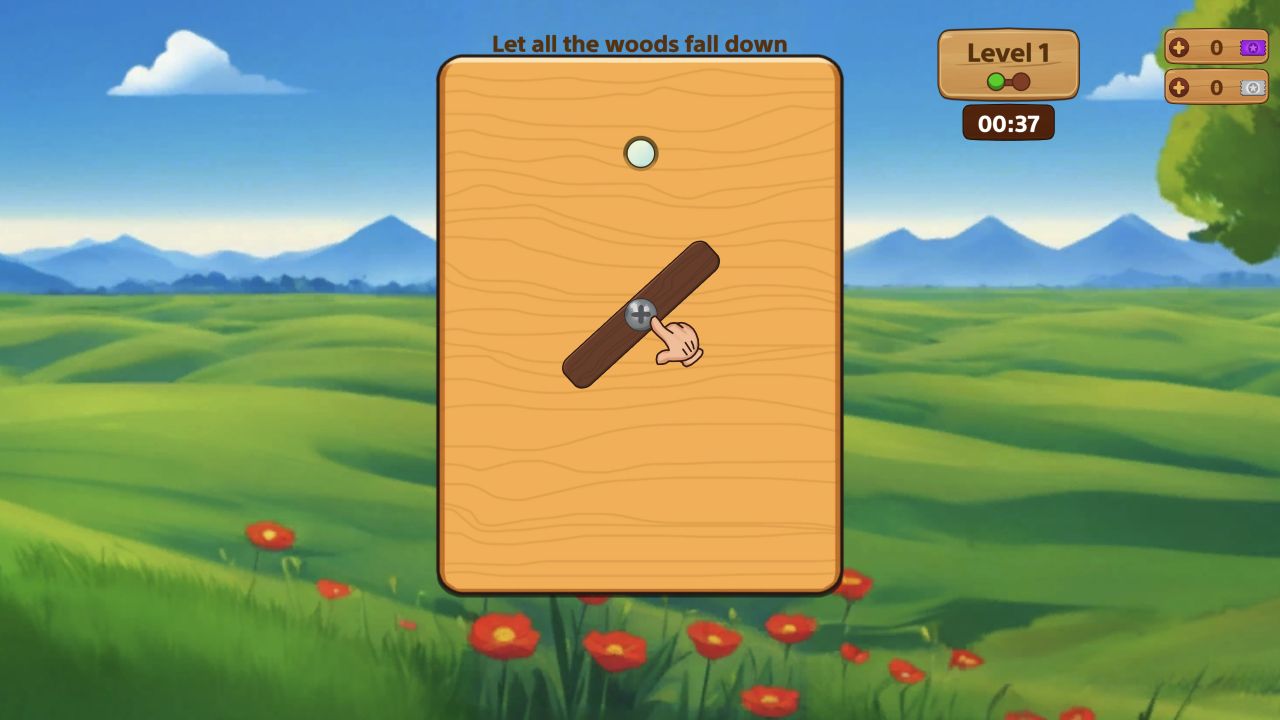
Wood Nuts exposes a screw, bar and empty hole. Amaze! exposes corridor endpoints. Tile Match reveals a larger grid after the opening click. Each supplies a concrete structure that can be described without calling the exercise brain training.
Four weekly prompts
The journal is successful when its notes become more precise, not when it promises a score outside the game. Readers who want evidence of learning effects should look for suitable research rather than treating an editorial exercise as a study.
- Week 1: record the goal and the first state change.
- Week 2: note which pieces are blocked by other pieces.
- Week 3: compare two boards by route, exposure or temporary space.
- Week 4: review which observations repeated and which were game-specific.
What the linked records actually contain
Wood Nuts Master: Screw Puzzle was tested on 2026-08-13 in Codex in-app Chromium 151.0.7922.76 at 1280×720. The recorded inputs were Close the preroll; Click the central screw. The visible record says: The objective read ‘Let all the woods fall down’ and the timer started at 00:55. The opening obstacle was a narrow dark bar with a central screw and an empty hole above. Clicking the center rotated the bar from horizontal to diagonal without removing the screw.
Amaze! was tested on 2026-08-13 in Codex in-app Chromium 151.0.7922.76 at 1280×720. The recorded inputs were Click game canvas; ArrowRight, then ArrowUp. The visible record says: Level 1 opened with an L-shaped corridor around a central void. Right painted the bottom corridor and Up painted the right edge. Each direction carried the ball to the next wall rather than one square.
Tile Match was tested on 2026-08-13 in Codex in-app Chromium 151.0.7922.76 at 1280×720. The recorded inputs were Close the preroll; Click the center of the game canvas. The visible record says: The opening used a narrow wooden chute rather than a full-width board. The tutorial said to tap three identical tiles. The click expanded the lower queue into a six-column fruit-tile grid with one pineapple highlighted.
These records support only the states and inputs described above. They do not establish later-level quality, average session length, mobile behavior, popularity, learning effects or competitive balance unless a separate source or test explicitly covers that question.
References and evidence
- Wood Nuts Master: Screw Puzzle — hands-on evidence — Desktop (macOS), Codex in-app Chromium 151.0.7922.76, 1280×720; tested 2026-08-13.
- Amaze! — hands-on evidence — Desktop (macOS), Codex in-app Chromium 151.0.7922.76, 1280×720; tested 2026-08-13.
- Tile Match — hands-on evidence — Desktop (macOS), Codex in-app Chromium 151.0.7922.76, 1280×720; tested 2026-08-13.