
A game enters the public set only after we reach a live board or scene, record the environment, apply a reproducible input and preserve the visible result. A menu screenshot is not gameplay evidence. A publisher description is not a hands-on observation. A failed or ambiguous input stays in the record instead of being rewritten as success.
The workflow separates four layers: catalog facts supplied upstream, the running third-party game, the screenshot captured by fulegames and the editorial interpretation written from that session. The Game Sources page explains the ownership boundary.
The evidence gate
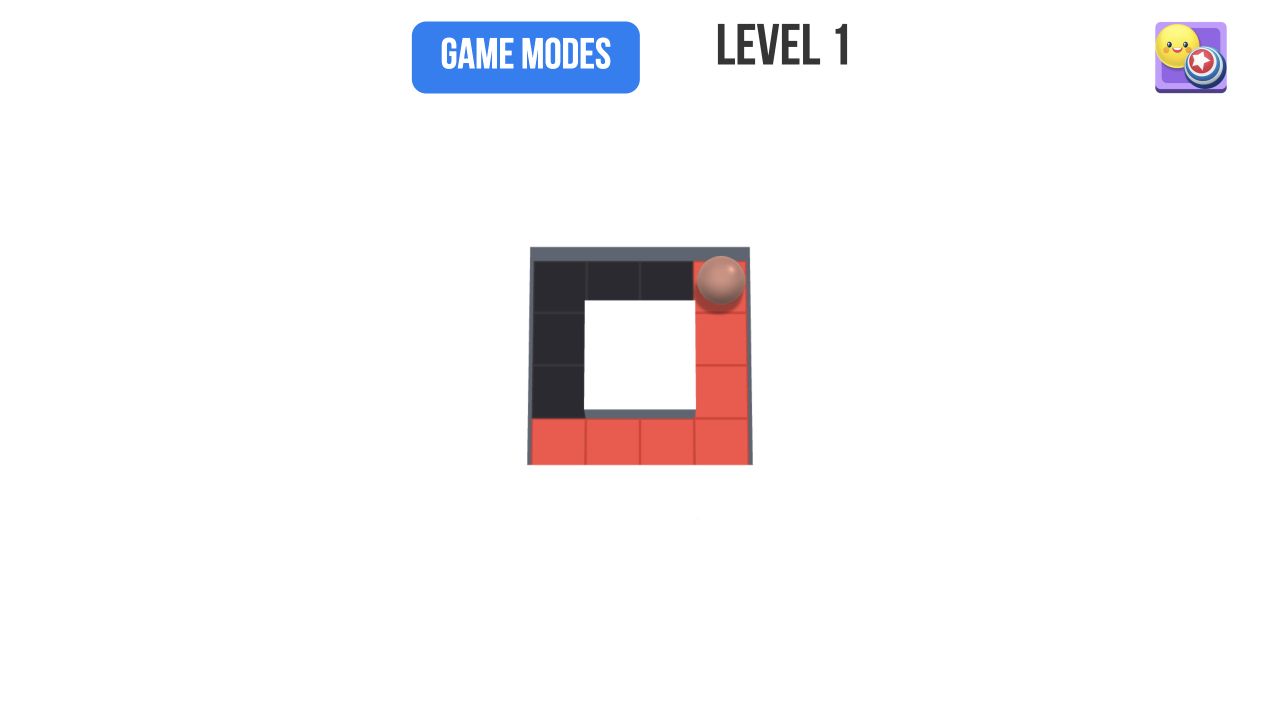
Amaze! demonstrates clear movement. Good Sort Master preserves a drag that did not rearrange the apple. Super Frog Adventure preserves an unresolved traversal result while its timer continued. Publishing all three outcomes makes the method falsifiable and gives readers more than promotional copy.
- Record date, device, browser and viewport.
- Reach a live state beyond preroll and menu.
- Write down the exact input sequence.
- Capture visible observations without inventing later behavior.
- Keep the page public only while its evidence remains current and reproducible.
What the linked records actually contain
Amaze! was tested on 2026-08-13 in Codex in-app Chromium 151.0.7922.76 at 1280×720. The recorded inputs were Click game canvas; ArrowRight, then ArrowUp. The visible record says: Level 1 opened with an L-shaped corridor around a central void. Right painted the bottom corridor and Up painted the right edge. Each direction carried the ball to the next wall rather than one square.
Good Sort Master: Triple Match was tested on 2026-08-13 in Codex in-app Chromium 151.0.7922.76 at 1280×720. The recorded inputs were Close the preroll; Drag an upper-left apple toward the upper-right shelf. The visible record says: Level 1 opened on a two-by-two shelf. The shelf contained exactly three apples, three cheese wedges, and three milk cartons. The attempted apple drag did not rearrange the item.
Super Frog Adventure was tested on 2026-08-13 in Codex in-app Chromium 151.0.7922.76 at 1280×720. The recorded inputs were Click the canvas; Press ArrowRight repeatedly, then ArrowUp. The visible record says: The first scene opened with four hearts, a 0/3 fruit counter, and a 196-second timer. Tutorial panels labeled horizontal movement and jumping. Discrete key presses did not produce a clearly visible traversal while the timer continued.
These records support only the states and inputs described above. They do not establish later-level quality, average session length, mobile behavior, popularity, learning effects or competitive balance unless a separate source or test explicitly covers that question.
References and evidence
- Amaze! — hands-on evidence — Desktop (macOS), Codex in-app Chromium 151.0.7922.76, 1280×720; tested 2026-08-13.
- Good Sort Master: Triple Match — hands-on evidence — Desktop (macOS), Codex in-app Chromium 151.0.7922.76, 1280×720; tested 2026-08-13.
- Super Frog Adventure — hands-on evidence — Desktop (macOS), Codex in-app Chromium 151.0.7922.76, 1280×720; tested 2026-08-13.
- About fulegames — Public editorial method and team scope.
- Game Sources and Playgama Relationship — Ownership and third-party delivery boundaries.