
The old article named clicker titles outside the current verified set and described their long-term choices without retained sessions. That does not meet the present standard. No classic clicker currently has a public fulegames record, so this page recommends none.
A future candidate must show the value of a click, the cost and effect of an upgrade, the rate before and after purchase, and any claimed offline return in a separately timed session. Depth requires changing decisions across recorded states, not a large counter.
Required clicker evidence
Hook Pin Jam and Gas Station are linked only to show how current records preserve a no-change click and a visible resource choice. A clicker must provide the same specificity before its name returns here.
- Baseline value from a fixed number of clicks.
- Upgrade cost and measured effect.
- Automation rate over a stated interval.
- Return state after a stated closed-tab interval.
- Prestige behavior only after an actual reset.
What the linked records actually contain
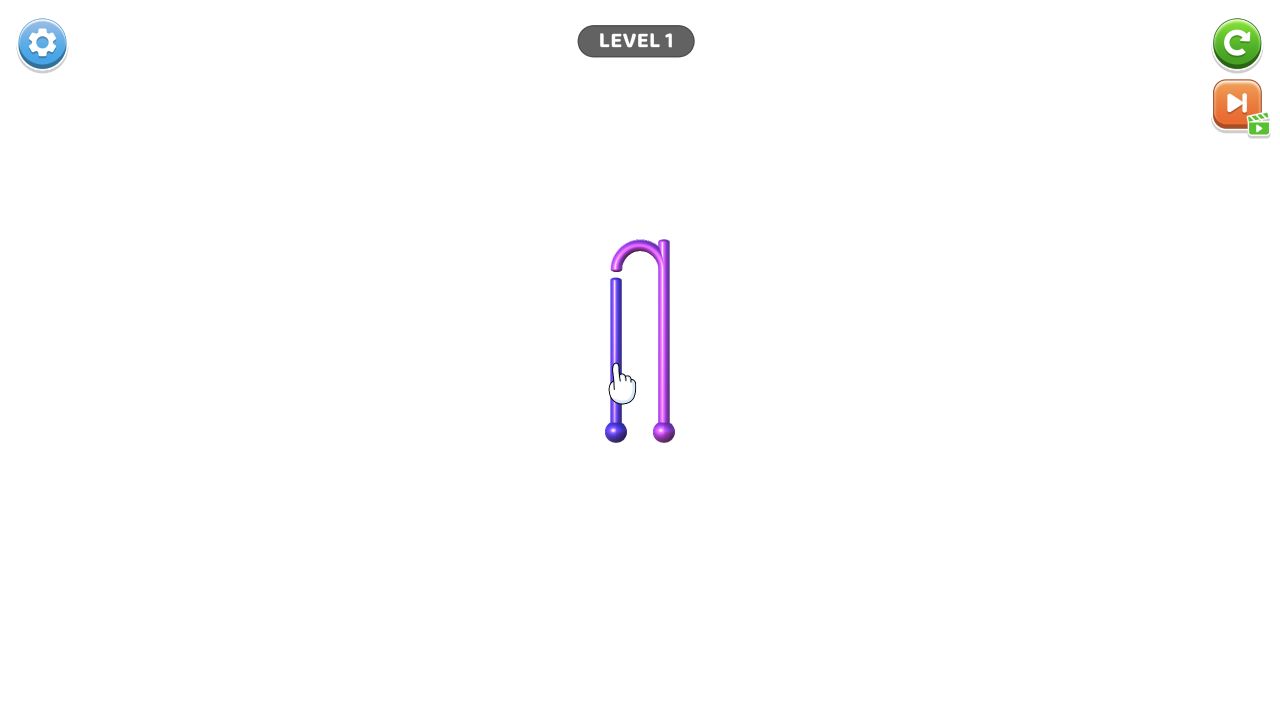
Hook Pin Jam was tested on 2026-08-13 in Codex in-app Chromium 151.0.7922.76 at 1280×720. The recorded inputs were Close the preroll; Click the purple hook near its center. The visible record says: Level 1 used a blank white field with one purple inverted-U hook. A tutorial hand pointed to the hook’s left leg. The center click produced no visible removal; restart, settings, and rewarded-skip controls remained visible.
Gas Station Simulator was tested on 2026-08-13 in Codex in-app Chromium 151.0.7922.76 at 1280×720. The recorded inputs were Click Let’s Play; Focus the scene and press W. The visible record says: The session loaded into a top-down station forecourt. The tutorial displayed both WASD and mouse-drag movement. Starting cash was 140 and the first marked purchase cost 100.
These records support only the states and inputs described above. They do not establish later-level quality, average session length, mobile behavior, popularity, learning effects or competitive balance unless a separate source or test explicitly covers that question.
References and evidence
- Hook Pin Jam — hands-on evidence — Desktop (macOS), Codex in-app Chromium 151.0.7922.76, 1280×720; tested 2026-08-13.
- Gas Station Simulator — hands-on evidence — Desktop (macOS), Codex in-app Chromium 151.0.7922.76, 1280×720; tested 2026-08-13.