
New-player advice becomes unreliable when it diagnoses a person instead of examining the screen. We did not measure anyone’s reflexes, compare win rates or run an hour-long training experiment. We did open four games with shooting or aiming mechanics and record what their interfaces exposed before and after a controlled input. The mistakes below are therefore inspection mistakes: ways a player can miss information already present in the opening state.
The four interfaces are meaningfully different. Balls: Ricochet uses a ball, numbered blocks and a shot multiplier. Bubble Blast combines a launcher, remaining-shot counter and colored cluster. Pool Shoot Tournament displays pocket values, bombs and an aiming state. Billiards 3D pairs a cue line with a power meter.
1. Firing before reading the counters
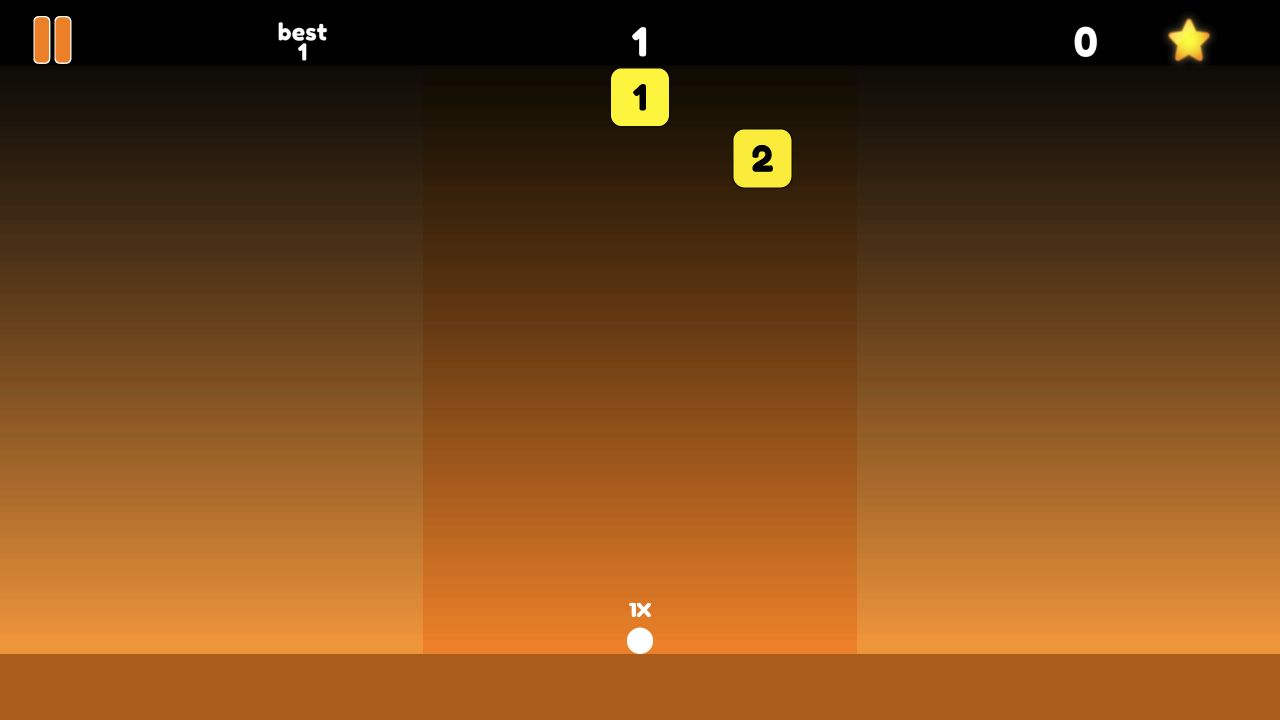
Balls: Ricochet began at score zero, stars zero and a 1× shot indicator. Its first straight shot changed score to one and added a block marked one. Bubble Blast began with twelve remaining shots, score zero and locked boosters. In both cases, the pre-shot counters define what a later screenshot can prove.
If you fire before noting them, you lose the baseline. Pause for one screen, name score, ammunition or remaining shots, and then connect the first input to the change.
2–4. Ignoring line, power and target value
Billiards 3D opened with a cue line aimed toward the top-middle pocket and a vertical power meter. Pool Shoot Tournament printed different values over its top pockets. These observations justify paying attention to direction and value; they do not justify a universal best shot.
- Do not treat an aiming line as decoration. Record where it points before changing it.
- Do not assume a visible power meter has changed unless the marker visibly moves.
- Do not treat every target as equal when the interface prints different values or numbers on them.
- Do not infer a hit from animation alone; look for score, remaining-shot or board-state confirmation.
5. Turning one result into a strategy guide
A first shot can prove that input was accepted and that a specific counter or board changed. It cannot prove the strongest tactic, the later difficulty curve or how a skilled player should sequence a full level. Our Pool Shoot click changed the aiming state while score remained zero and bombs remained at five. The responsible conclusion is narrow: the click affected aim, not score.
Use this checklist to create a clean first-session record. Once the same mechanic has been repeated under several states, a strategy article can make stronger comparisons. Until then, clarity beats confidence.
What the linked records actually contain
Balls: Ricochet! was tested on 2026-08-13 in Codex in-app Chromium 151.0.7922.76 at 1280×720. The recorded inputs were ArrowUp and Enter from the menu; Click the center of the live field. The visible record says: The first field began with one white ball and a yellow block marked 2. The initial HUD showed score 0, stars 0, and a 1× shot indicator. The first straight shot changed the score to 1 and added a block marked 1.
Bubble Blast was tested on 2026-08-13 in Codex in-app Chromium 151.0.7922.76 at 1280×720. The recorded inputs were Close the preroll and its confirmation; Click above-left of the launcher. The visible record says: The live board began with a triangular cluster of red, blue, and orange bubbles. The launcher showed 12 remaining shots and an orange current bubble. The HUD started at score 0 with three empty star slots and locked booster buttons.
Pool Shoot Tournament was tested on 2026-08-13 in Codex in-app Chromium 151.0.7922.76 at 1280×720. The recorded inputs were Close the preroll; Click the table to fire toward the center. The visible record says: The active table mixed red, green, and yellow numbered balls. Pocket values read 50, 100, 250, 100, and 50 across the top. The first click changed the current aiming state while score stayed 0 and bombs stayed at 5.
Billiards 3D: Russian Pyramid was tested on 2026-08-13 in Codex in-app Chromium 151.0.7922.76 at 1280×720. The recorded inputs were Click the opening table; Click once on the aiming tutorial. The visible record says: The live table opened in a Russian-language aiming tutorial. A cue line ran from the yellow cue ball toward the top-middle pocket. Top-view/3D-view controls and a vertical power meter were visible.
These records support only the states and inputs described above. They do not establish later-level quality, average session length, mobile behavior, popularity, learning effects or competitive balance unless a separate source or test explicitly covers that question.
References and evidence
- Balls: Ricochet! — hands-on evidence — Desktop (macOS), Codex in-app Chromium 151.0.7922.76, 1280×720; tested 2026-08-13.
- Bubble Blast — hands-on evidence — Desktop (macOS), Codex in-app Chromium 151.0.7922.76, 1280×720; tested 2026-08-13.
- Pool Shoot Tournament — hands-on evidence — Desktop (macOS), Codex in-app Chromium 151.0.7922.76, 1280×720; tested 2026-08-13.
- Billiards 3D: Russian Pyramid — hands-on evidence — Desktop (macOS), Codex in-app Chromium 151.0.7922.76, 1280×720; tested 2026-08-13.