Hook Pin Jam
Hook Pin Jam is an untangling puzzle where players tap hooks to release them, clear the board, earn rewards, and solve each level in as few moves as possible.
Hook Pin Jam
Overview
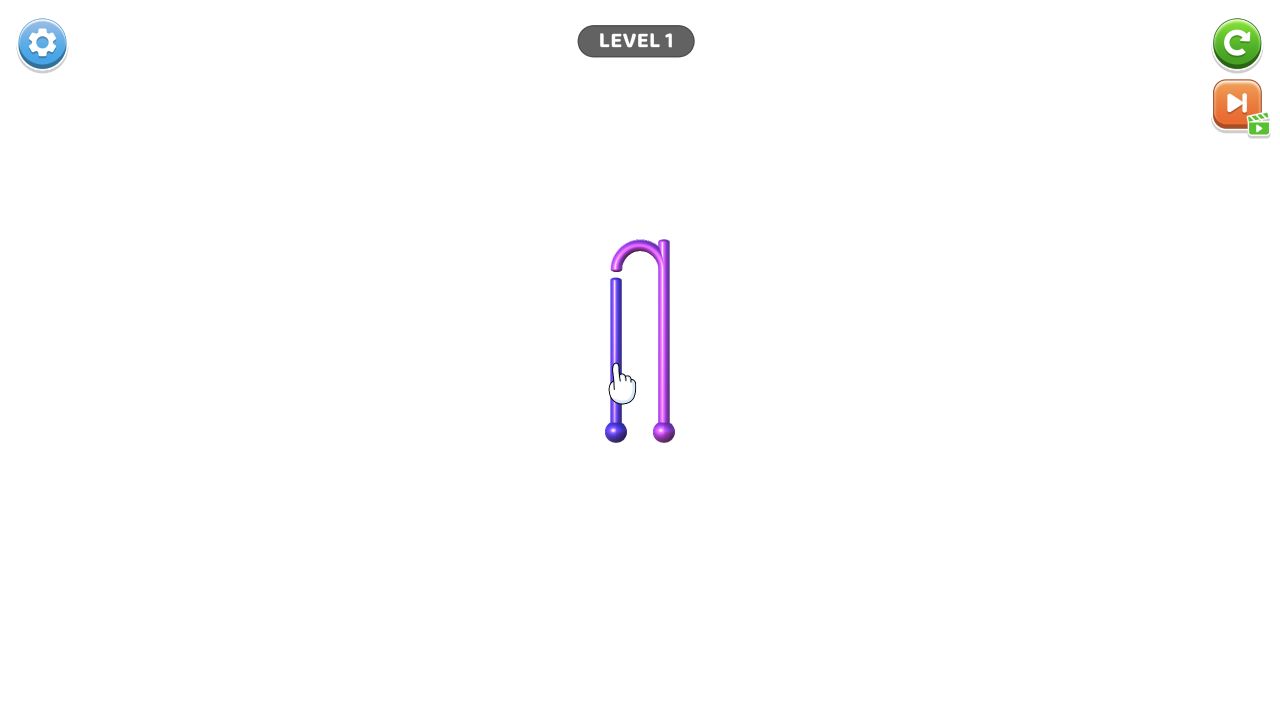
Hook Pin Jam is a compact untangling puzzle. Players release hooks, clear the board, and try to solve intricate layouts efficiently. The goal is not only completion but clean move order.
The game belongs in puzzle and strategy because each hook can affect the rest of the layout. Releasing the wrong hook first can create a worse jam.
The official description frames the game around untying hooks, accumulating rewards, and clearing boards in as few moves as possible. That combination makes Hook Pin Jam more specific than a simple tap puzzle. The visible action is easy: tap a hook to release it. The real work is reading dependency. Which hook is free? Which hook is trapped? Which hook blocks several others? Which move looks available but actually makes the layout harder?
That dependency logic is why the game sits comfortably in both puzzle and strategy categories. The board is not asking for fast reactions. It is asking for order. A player who taps everything visible may clear early levels, but later layouts punish careless release. The satisfaction comes from spotting the hidden sequence, then watching a tight tangle loosen one move at a time.
The vertical orientation and Android, iOS, and desktop support are a good fit. Hook puzzles are naturally readable in a tall layout because pieces can stack and cross without requiring a wide action field. Touch control also suits the mechanic. Tapping a hook feels direct, and the challenge remains in choosing the hook, not executing a complex input.
How it plays
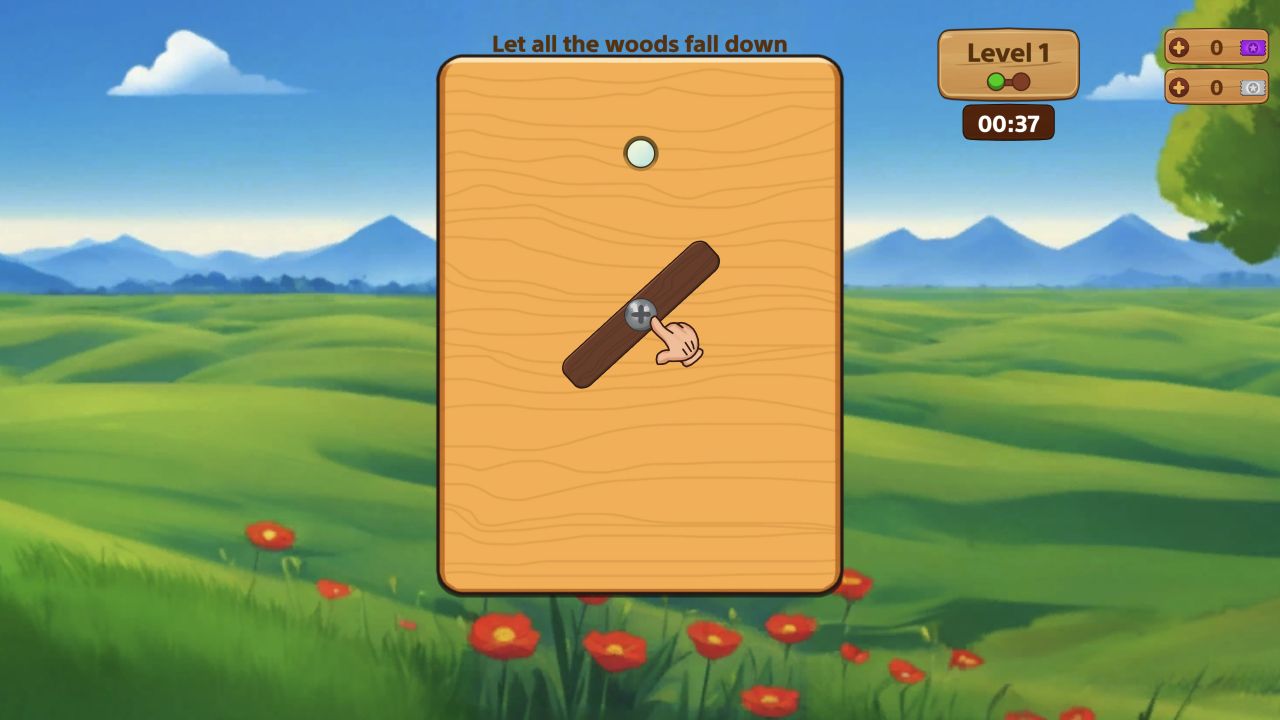
Players tap hooks to release them. The board clears when all hooks are untangled. Rewards are earned through progress, and fewer moves are better.
The best approach is to identify the hook that blocks the most others.
Each level begins as a small knot of relationships. Some hooks may be directly removable. Others may be blocked by neighboring hooks, pins, or crossing paths. The player has to inspect the board and decide which removal opens the most progress. A good first move often frees several future moves. A bad first move may use up an easy option while leaving the real blockage intact.
The fewest-moves goal changes the player's mindset. If the only goal were completion, players could tap experimentally until something worked. When move count matters, every action should have a reason. That gives the game a cleaner strategic layer. The player is not only asking "can I remove this?" but "should I remove this now?"
The levels also include rewards and special challenges. Rewards provide progress feedback, while challenges can create reasons to replay or solve more carefully. The lives system is important for player expectations. If lives are limited and losing all lives may require waiting or watching ads to continue, then careful play becomes more valuable. Guessing is no longer harmless. A strong review should mention that the game rewards patience because the progression systems make mistakes costlier.
Hook Pin Jam becomes more engaging as layouts become complex. Early stages teach the tap rule. Later stages test whether the player can read overlapping dependencies. The game is at its best when a level looks tangled at first, then reveals a clear sequence after a patient scan.
Player notes
Do not tap hooks just because they are visible. Find dependency order.
If a hook is trapped by several others, solve the surrounding hooks first.
The first useful habit is to identify free hooks and locked hooks. A free hook can be removed without disturbing the structure. A locked hook needs something else cleared first. Mark those mentally before tapping. If several hooks are free, choose the one that exposes the most locked hooks. This keeps the board opening instead of merely shrinking.
The second habit is to trace crossings. If a hook appears trapped, follow the line or shape that blocks it. The blocker may be on the opposite side of the board. Untangling puzzles often hide dependency at a distance. A hook near the top may depend on a release near the bottom. This is why full-board reading matters.
The third habit is to avoid panic after a wrong move. If the board becomes worse, pause and reassess. Which hooks changed position? Which paths are now blocked? Which remaining hook has become the new key? A failed attempt can still teach the structure, especially if you remember the move that caused the jam.
Because the game may involve lives, efficient learning matters. If you are unsure about a move, look for a safer one that cannot make the board worse. In many hook puzzles, a safe move is one that removes an outside piece or clears a hook with no crossings attached. Save uncertain central hooks until the surrounding structure is cleaner.
Solving strategy
Start from the outside and move inward when the layout allows it. Outer hooks often have fewer dependencies, so clearing them can reveal the shape of the knot. However, do not follow this rule blindly. Sometimes an outside hook is decorative, while the real blockage sits in the center. The correct rule is to clear hooks that reduce dependency, and outside hooks often do that.
Look for "key hooks." A key hook is a hook that blocks several others. Removing it can suddenly make the level simple. These hooks are not always removable at the start. If a key hook is locked, your job is to unlock it, not to waste moves elsewhere. Identify what holds it in place, solve that smaller problem, then return to the key hook.
Respect the fewest-moves objective. If two moves both clear a hook, choose the one that creates more future options. A move that removes one isolated hook may be necessary, but a move that removes one hook and frees three more is stronger. Over time, this move-efficiency thinking becomes the main appeal of Hook Pin Jam.
Use rewards as motivation, not as a reason to rush. The game offers currency and new challenges, but the puzzle remains the core. Trying to speed through levels can burn lives or create avoidable mistakes. A slower, cleaner solve is usually better for long-term progress.
Editorial assessment
Hook Pin Jam should be evaluated on visual clarity, dependency fairness, move-count pressure, reward pacing, and lives-system balance. Visual clarity means players can see which hooks overlap and which paths block others. Dependency fairness means the correct order can be discovered through observation, not hidden guessing. Move-count pressure should make efficient solving satisfying without making experimentation impossible. Rewards should feel like progress. The lives system should encourage care without feeling punishing.
The game appears strongest in its simple input and strategic reading. A tap is easy, but a good tap takes thought. Its main risk is visual clutter. If later boards become too dense or crossings are hard to distinguish, the puzzle can shift from strategic to frustrating. Clear art and readable layering are therefore essential.
Hook Pin Jam is best for players who enjoy untangling puzzles, dependency logic, and short levels with efficiency goals. It is less ideal for players who want action, story, or open-ended creativity. The theme is abstract, but the thinking is concrete. Each board is a question of order.
Controls
Tap hook: Release it. Board reading: Untangle all hooks. Move efficiency: Solve with fewer moves. Rewards: Complete levels and challenges to earn currency. Lives: Play carefully because failed attempts may consume limited lives.
Pros
Hook dependencies create satisfying logic. Simple tap control is accessible. Reward flow supports continued play. Fewest-moves pressure gives levels replay value. Vertical mobile layout suits the puzzle format. Later complexity can reward careful full-board scanning.
Tradeoffs
Complex layouts may be hard to read. Wrong order can create frustration. The theme is abstract. Limited lives can make guessing feel costly. Reward systems should not distract from puzzle clarity.
Controls reference
| Input | Action |
|---|---|
Tap hook | Release it. |
Board reading | Untangle all hooks. |
Move efficiency | Solve with fewer moves. |
Rewards | Complete levels and challenges to earn currency. |
Lives | Play carefully because failed attempts may consume limited lives. |
Tips & tricks
Do not tap hooks just because they are visible. Find dependency order. If a hook is trapped by several others, solve the surrounding hooks first. The first useful habit is to identify free hooks and locked hooks. A free hook can be removed without disturbing the structure. A locked hook needs something else cleared first. Mark those mentally before tapping. If several hooks are free, choose the one that exposes the most locked hooks. This keeps the board opening instead of merely shrinking. The second habit is to trace crossings. If a hook appears trapped, follow the line or shape that blocks it. The blocker may be on the opposite side of the board. Untangling puzzles often hide dependency at a distance. A hook near the top may depend on a release near the bottom. This is why full-board reading matters. The third habit is to avoid panic after a wrong move. If the board becomes worse, pause and reassess. Which hooks changed position? Which paths are now blocked? Which remaining hook has become the new key? A failed attempt can still teach the structure, especially if you remember the move that caused the jam. Because the game may involve lives, efficient learning matters. If you are unsure about a move, look for a safer one that cannot make the board worse. In many hook puzzles, a safe move is one that removes an outside piece or clears a hook with no crossings attached. Save uncertain central hooks until the surrounding structure is cleaner.
What we like, what we don't
Pros
- Hook dependencies create satisfying logic.
- Simple tap control is accessible.
- Reward flow supports continued play.
- Fewest-moves pressure gives levels replay value.
- Vertical mobile layout suits the puzzle format.
- Later complexity can reward careful full-board scanning.
Cons
- Complex layouts may be hard to read.
- Wrong order can create frustration.
- The theme is abstract.
- Limited lives can make guessing feel costly.
- Reward systems should not distract from puzzle clarity.
Frequently asked
What is the objective?
Untie hooks, clear the board, and earn rewards.
How do you release hooks?
Tap on hooks.
Is move count important?
Yes. The catalog mentions solving in the fewest moves possible.
What should beginners find first?
Hooks blocking the most other hooks.
Is Hook Pin Jam a strategy game?
Yes. The controls are simple, but the strategy comes from finding the correct release order and using fewer moves.
What are rewards used for?
The game uses level progress and challenges to provide in-game currency or rewards, giving players a sense of progression.
Why do lives matter?
The listing mentions limited lives, so failed attempts may require waiting or watching ads to continue. That makes careful solving better than random tapping.
Does it work on mobile?
Yes, the game is listed for Android and iOS, and tap controls suit touch screens well.
What is the best beginner strategy?
Find free hooks, trace what each locked hook depends on, and remove the hook that opens the most future moves.
Categories
Puzzle, Strategy
Platform
Desktop + mobile
Devices
For Android, For IOS, For Desktop
Orientation
Portrait
Blog
More to read between rounds
Six random blog picks from the editorial desk.
Skill guides
Driving Games: How Physics Models Shape the Feel
Browser driving games can feel wildly different because they are built on different ideas of speed, grip, and failure.
Skill guides
How to Train Pattern Recognition With Browser Puzzles
A simple four-week puzzle routine can improve pattern recognition if you treat each session as practice in noticing shape, not just clearing boards.
Guides
A Beginner's Guide to Idle and Clicker Games
Clickers look like single-button games but they are actually a serious genre with deep design conventions. Here is how to get started.
Opinion
When to Quit a Running Game (And When to Stick)
Endless runners are best when they create one more try energy, not when they turn small failure into quiet obligation.
Opinion
Why Controls Matter More Than Graphics
Pretty art can attract attention, but poor controls are what make players close the tab for good.
Lists
Simple Clicker Games With Real Depth
The strongest clicker games start with a single obvious action and then keep changing what that action means.