Pool Shoot Tournament
Pool Shoot Tournament is a skill-shot color-matching game where players shoot balls, clear groups of three or more, and chase high scores through accurate aiming.
Pool Shoot Tournament
Overview
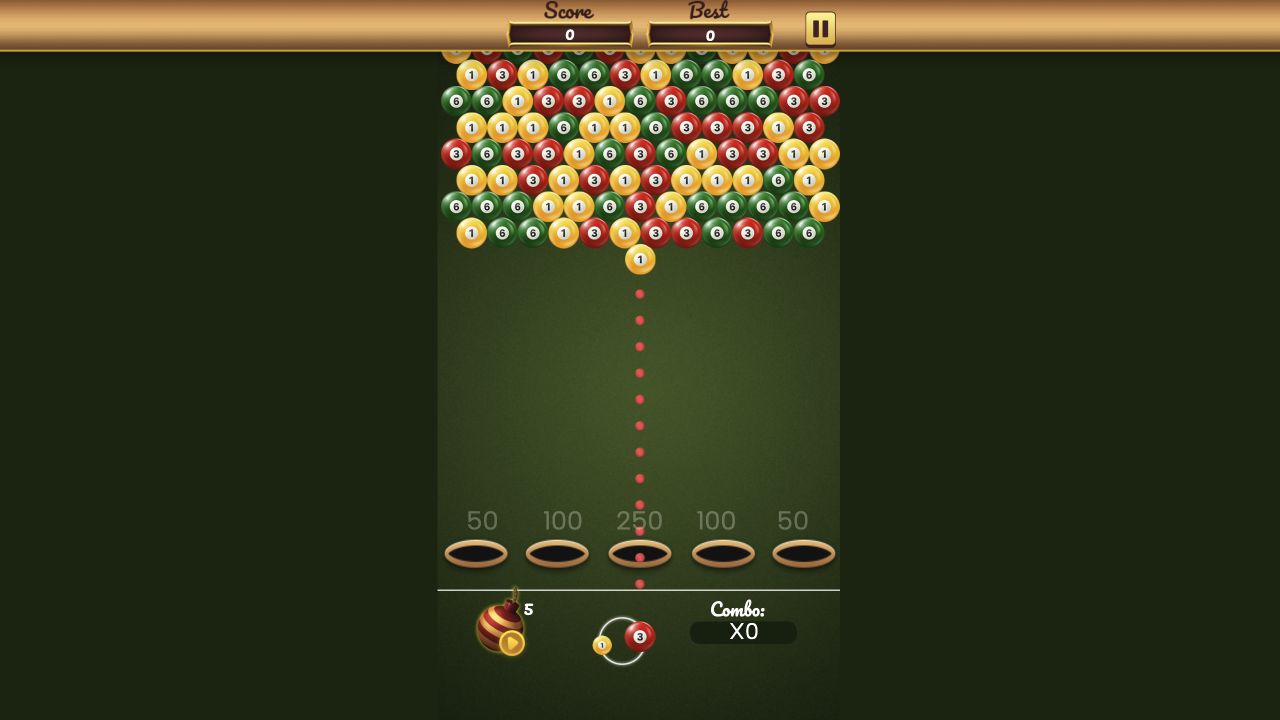
Pool Shoot Tournament blends pool-style aiming with bubble-shooter matching. The player shoots colored balls, tries to connect groups of three or more, and earns points by clearing larger clusters. The result is more puzzle than traditional pool, but the aiming language makes each shot feel physical.
The game belongs in action and puzzle because timing and accuracy matter alongside color strategy. A good shot is not only the right color; it is the right angle into the right group.
The tournament framing gives high-score play a competitive flavor.
The official control notes add two important details. First, the minimum clear is three balls of the same color. Second, the game ends when at least one ball from the approaching wall touches the bottom. That means Pool Shoot Tournament is not a relaxed sorting board. It is a pressure puzzle. Every poor shot can add clutter, and the board is moving toward failure.
The pool comparison is useful because aim, direct hits, and ricochet all matter. A standard bubble shooter often focuses on color clusters and ceiling attachment. Pool Shoot Tournament adds a stronger sense of shot line. You may hit a group directly, bank a shot off the side, or use angle control to reach a cluster that is blocked from the front. The best play is a mix of color reading and geometry.
The high like signal in the catalog fits the loop. It is easy to understand, fast to restart, and satisfying when one shot clears a large group. But it can also punish careless play. A page that only says "match colors" misses the main tension. The player must match colors while keeping the lower danger line under control.
How it plays
Players aim and shoot balls toward matching colors. Clearing a large group gives better results than removing tiny matches. The objective is to earn the highest score possible by choosing shots that open the board and create chain opportunities.
The best early habit is to look for clusters with weak support. One accurate shot can remove more than a direct small match.
Each shot should answer two questions. What color can I clear now, and what position will the board have afterward? A three-ball match is useful if it removes pressure or opens a path. A larger match is better when it clears a wide section, drops unsupported balls, or prevents the wall from reaching the bottom. The score incentive pushes players toward larger groups, but survival sometimes requires a smaller emergency clear.
Ricochet matters because not every useful cluster is reachable directly. If a group is tucked behind another color, a bank shot off the wall may reach it. The player needs to judge whether the rebound path is reliable. A risky bank shot can save a board, but a missed bank can add the wrong color to an already crowded area. This is the pool-like part of the game: angle control creates opportunity.
The approaching wall changes the pace. If the lower area is safe, you can plan for bigger clears. If the wall is close to the bottom, survival comes first. Clear the lowest dangerous clusters, even if they are not the highest-scoring option. High-score play only matters if the run continues.
The game is listed for Android, iOS, and desktop with vertical orientation. That shape is sensible because the wall descends toward the bottom and the shooter sits below. Mobile touch aiming can feel natural, but precision depends on how clearly the aiming line appears. Desktop mouse aiming may be better for delicate bank shots.
Player notes
Do not rush the shot. A small aim correction can be the difference between clearing a group and adding clutter.
Prioritize large groups when safe, but use smaller clears if they open a better angle.
The first mistake to avoid is shooting only at the current ball color without reading the board. Sometimes the current color has a tiny match that does not help. Sometimes it can be placed to create a larger future group. If the game shows upcoming balls, use that information. If it does not, focus on immediate board safety.
The second mistake is ignoring the bottom line. In many matching shooters, players become fascinated by high clusters and forget that danger is approaching from below. Pool Shoot Tournament's loss condition makes the bottom area critical. If any ball from the impending wall touches the bottom, the run ends. This creates a constant triage: score, setup, or emergency clear.
The third mistake is overusing bank shots. Rebounds are powerful, but they require precision. Use them when they reach a meaningful cluster or save the board. Do not bank simply because it looks stylish. A direct shot that clears pressure is better than a fancy miss.
High-score strategy
High scores come from clearing large groups and creating board drops. Look for clusters connected by weak points. If one shot can remove the color that supports several other balls, the result can be much stronger than a surface match. These shots require board reading, but they are where the game becomes most satisfying.
Balance setup shots with immediate clears. A setup shot places a ball where it will create a bigger match later. This is useful when the wall is not close to the bottom. When danger is high, setup shots become risky because they add clutter before giving value. Use the wall position to decide how ambitious you can be.
Keep lanes open for future colors. If you bury a color behind several wrong balls, later shots may become impossible. Try to preserve at least one reachable cluster for common colors. This makes unlucky ball order easier to handle.
When shooting at an angle, aim for a landing pocket, not just a color. The ball needs to attach where it creates a match or a useful future shape. A shot that touches the right color but sticks in the wrong place may fail to clear. Think about the final resting point.
Editorial assessment
Pool Shoot Tournament should be evaluated on aiming clarity, color readability, ricochet consistency, pressure pacing, and score feedback. Aiming clarity means players can predict the shot line. Color readability means matching groups are easy to distinguish. Ricochet consistency means bank shots behave predictably. Pressure pacing means the wall descends fast enough to create tension without feeling unfair. Score feedback means large clears feel meaningfully rewarded.
The game appears strongest as a hybrid of billiards-like aim and bubble-shooter matching. It gives simple rules but enough geometry to reward skill. Its main risk is device precision. On a small phone, tiny angle differences can matter, especially for bank shots. Good aiming guides and clean visuals are essential.
This is a strong fit for players who enjoy color-matching shooters, arcade accuracy, high-score chasing, and bank-shot strategy. It is less ideal for players expecting standard eight-ball pool or slow puzzle boards. The tournament identity is about scoring under pressure.
Controls
Aim input: Line up the ball shot. Shoot action: Fire toward matching colored balls. Score strategy: Clear groups of three or more. Ricochet: Use side angles when direct shots are blocked. Survival rule: Prevent the approaching wall from touching the bottom.
Pros
Pool-like aiming gives matching play a skill element. Large-group clears reward planning. High-score structure supports repeated attempts. Ricochet shots add geometry to color matching. The descending wall creates real pressure. Vertical play suits mobile and desktop shooter layouts.
Tradeoffs
Players expecting standard billiards may find the match rules different. Poor shots can clutter the board. Accuracy depends on device input comfort. Bank shots can be frustrating without precise aiming. Survival pressure may feel intense for players wanting a relaxed puzzle.
Controls reference
| Input | Action |
|---|---|
Aim input | Line up the ball shot. |
Shoot action | Fire toward matching colored balls. |
Score strategy | Clear groups of three or more. |
Ricochet | Use side angles when direct shots are blocked. |
Survival rule | Prevent the approaching wall from touching the bottom. |
Tips & tricks
Do not rush the shot. A small aim correction can be the difference between clearing a group and adding clutter. Prioritize large groups when safe, but use smaller clears if they open a better angle. The first mistake to avoid is shooting only at the current ball color without reading the board. Sometimes the current color has a tiny match that does not help. Sometimes it can be placed to create a larger future group. If the game shows upcoming balls, use that information. If it does not, focus on immediate board safety. The second mistake is ignoring the bottom line. In many matching shooters, players become fascinated by high clusters and forget that danger is approaching from below. Pool Shoot Tournament's loss condition makes the bottom area critical. If any ball from the impending wall touches the bottom, the run ends. This creates a constant triage: score, setup, or emergency clear. The third mistake is overusing bank shots. Rebounds are powerful, but they require precision. Use them when they reach a meaningful cluster or save the board. Do not bank simply because it looks stylish. A direct shot that clears pressure is better than a fancy miss.
What we like, what we don't
Pros
- Pool-like aiming gives matching play a skill element.
- Large-group clears reward planning.
- High-score structure supports repeated attempts.
- Ricochet shots add geometry to color matching.
- The descending wall creates real pressure.
- Vertical play suits mobile and desktop shooter layouts.
Cons
- Players expecting standard billiards may find the match rules different.
- Poor shots can clutter the board.
- Accuracy depends on device input comfort.
- Bank shots can be frustrating without precise aiming.
- Survival pressure may feel intense for players wanting a relaxed puzzle.
Frequently asked
What is the goal?
Score highly by shooting balls and clearing matching groups.
How many balls need to match?
Three or more matching balls clear together.
Is it a pool game?
It borrows aiming from pool, but the core is color-matching shooting.
What is the best strategy?
Aim for larger clusters and angles that open future shots.
How do you lose?
The run ends when at least one ball from the approaching wall touches the bottom.
Are ricochet shots important?
Yes. Rebounds can reach groups that direct shots cannot, but they should be used when the angle is reliable.
Should I always clear the biggest group?
Not always. Clear the biggest group when the board is safe. If the wall is close to the bottom, prioritize survival clears first.
Is it good on mobile?
Yes, it is listed for Android and iOS with vertical orientation. Desktop may feel more precise for difficult bank shots.
Categories
Action, Puzzle
Platform
Desktop + mobile
Devices
For Android, For IOS, For Desktop
Orientation
Portrait
Blog
More to read between rounds
Six random blog picks from the editorial desk.
Industry
Why Browser Games Are Making a Comeback
The browser as a games platform almost died with Flash. A quiet revival across the last few years has changed that completely.
Behind the scenes
How We Review Browser Games (And What We Look For)
A transparent look at the simple, repeatable review process we use before a browser game earns editorial coverage on the site.
Lists
Simple Clicker Games With Real Depth
The strongest clicker games start with a single obvious action and then keep changing what that action means.
Guides
Casual vs Hardcore: Choosing Your Style of Free Online Gaming
These two labels are everywhere in gaming culture but rarely defined. Here is what they actually mean for your free time.
Industry
The Evolution of Free Online Games: From Flash to HTML5
A short history of how free browser games went from Flash banners to a modern catalog of WebGL-powered titles, and what changed along the way.
Lists
The Best Merge Games for Relaxing Play
The most soothing merge games turn clutter into order at a pace that feels deliberate rather than sleepy.