Balls: Ricochet!

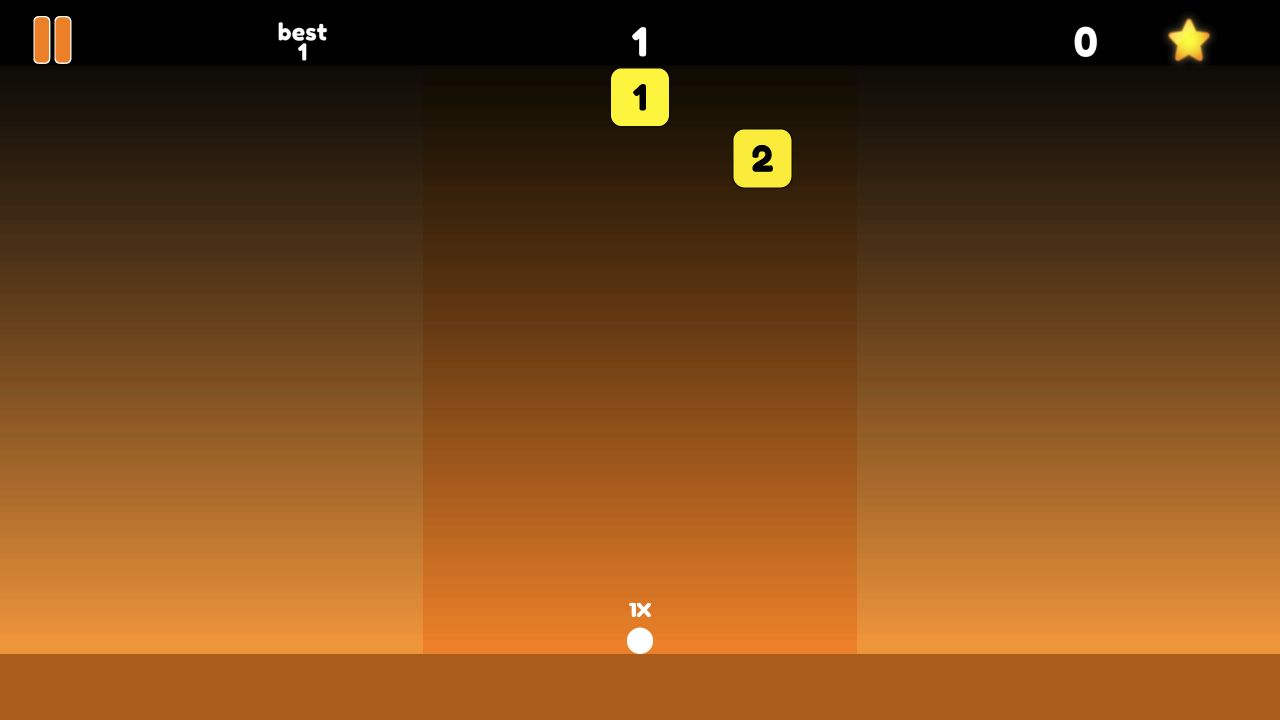
Balls: Ricochet! is a retro arcade shooting puzzle where players set the ball direction, use level geometry, and destroy blocks through rebounds.

Original editorial guideEditor score 8.5/10

Balls: Ricochet!

Balls: Ricochet!

Overview

Balls: Ricochet! pays tribute to retro arcade shooting. The player's task is to set the ball's direction so it uses the environment to destroy blocks. The appeal is angle mastery: one shot can bounce through several targets if placed well.

The game belongs in puzzle, arcade, and strategy because the shot path matters more than raw speed.

The official description openly connects the game to old retro concepts from the early 1980s, and that reference is useful. Balls: Ricochet! is built around an idea that has stayed durable for decades: give the player a simple projectile, a room full of targets, and enough rebound physics to make one clever shot feel better than several obvious ones. The controls are easy. The thinking is in the angle.

This makes the game different from a standard brick breaker. In a brick breaker, the player usually keeps a paddle alive and reacts to the ball after launch. In Balls: Ricochet!, the more important decision happens before the ball moves. You set the direction, use walls and blocks as tools, and try to destroy as much as possible through one efficient path. The pleasure is partly strategic and partly physical. A good shot feels like a small calculation that turns into motion.

The catalog places the game under puzzle, arcade, and strategy, with tags such as destroy, bricks, challenging, one-player, and target. That mix is accurate. It is not a pure reflex game, because waiting and aiming matter. It is not a pure logic puzzle either, because rebounds need a feel for momentum and collision. The best description is a retro ricochet puzzle shooter where score chasing and level geometry carry the experience.

How it plays

Players set the ball direction, then watch it ricochet off level geometry and break blocks. The goal is to use rebounds efficiently.

The best approach is to aim for angles that hit multiple blocks or open the layout.

The important verb is "set." You are not simply tapping a target. You are choosing a line that may hit a wall, bounce into a block, continue into another surface, and create a chain of destruction. A direct shot can be correct when a block is exposed, but the satisfying shots are usually indirect. A wall can turn a bad angle into a perfect one. A block can become a temporary deflector. A narrow gap can let the ball reach the back of a cluster that looked protected from the front.

The level environment is therefore part of your weapon. Before launching, look at the walls first. Ask which surfaces can redirect the ball toward dense targets. Then look for blocks that will be removed early and change the path for later bounces. A shot that destroys a front block may open a route behind it. A shot that skips the front block may reach a higher-value cluster. These are small choices, but they separate lucky shots from planned shots.

Correct ball physics are one of the advertised strengths, and for a ricochet game that matters more than visual decoration. If the bounce feels predictable, players can learn from mistakes. If a shot misses by a little, the player can adjust by a little. That learning loop is central to the retro appeal. You fire, watch, remember the angle, and improve the next attempt.

The game also has a score-chasing layer. The description encourages players to pursue a best score and beat a friend's result. That changes how levels are played. Clearing blocks may be enough for casual progress, but high-score play asks for efficiency. Fewer wasted shots, more multi-block hits, and smarter use of walls all become meaningful. A player who only aims directly will finish some layouts, but a player who masters rebounds will get more value from each shot.

Player notes

Look at walls as tools. A direct shot is not always strongest.

If a block is hard to reach, find a bounce route.

Start each level by identifying the densest block area and the most isolated block. Dense areas reward chain shots. Isolated blocks may require a special angle later. If you spend your best rebound route on a single easy block, the dense area may become harder to clear. If you ignore isolated blocks until the end, you may be forced into awkward low-value shots. The right order depends on how the level is built.

A strong beginner habit is to aim for "second contact." Instead of thinking only about what the ball hits first, think about where it goes after that. The first collision starts the shot, but the second and third collisions often decide whether the shot was good. In a ricochet game, a first hit that looks strange can be excellent if it sends the ball through several later targets.

Use shallow angles carefully. A shallow wall bounce can travel a long distance and scrape across a row, but it can also miss by a small margin. Steeper angles are easier to read but may not cover as much territory. The best players switch between them depending on the layout. Wide open levels invite long diagonal shots. Tight levels with protected pockets may need sharper controlled rebounds.

If the game gives limited attempts or score penalties for wasted shots, do not fire until you have a reason. "Maybe it will bounce somewhere useful" is not a plan. A plan can be simple: hit the left wall, enter the top gap, break the upper row, and hopefully drop into the middle. Even if the plan fails, it gives you information. Random shots only tell you that the board can be chaotic.

Why the retro design still works

Balls: Ricochet! relies on a design idea that has survived because it is readable. The player can see the ball, the walls, and the blocks. There is no complicated story required and no long tutorial standing between the player and the first useful shot. That simplicity helps browser play. Someone can open the game, take a shot, understand the mistake, and try again within seconds.

The retro mood also creates a fair standard for judging the game. It does not need cinematic progression or a huge upgrade tree. It needs clean physics, visible targets, responsive aiming, and a scoring loop that makes improvement feel measurable. If those pieces are present, the game has enough content to hold attention. If any of those pieces fail, the simplicity becomes a weakness.

The vertical orientation is a sensible fit. A tall playfield gives rebounds room to travel and works well on phones. On mobile, touch aiming can feel natural, but precision depends on how clearly the direction line or aiming feedback is shown. On desktop, mouse control usually makes tiny angle adjustments easier. Both devices can work, but players chasing scores may prefer the platform that gives them the most exact aim.

Editorial assessment

For review purposes, Balls: Ricochet! should be evaluated on four concrete standards. First, physics consistency: similar angles should produce similar bounces. Second, layout quality: levels should offer meaningful rebound routes rather than random block piles. Third, aiming clarity: the player should understand where the ball is likely to travel before launch. Fourth, score motivation: the game should make efficient shooting feel rewarding.

The game appears strongest in its clean premise. It knows what it is: a retro-inspired ricochet shooter about blocks, walls, and better scores. Its main risk is repetition. If later levels do not introduce new layouts, target positions, or rebound problems, the experience may flatten. That does not ruin the core loop, but it means the most enthusiastic players will care about variety and scoring.

This is a good recommendation for players who like angle puzzles, brick-destruction games, and old-school arcade logic. It is less ideal for players who want character progression, story, or fast movement control. The fun comes from setting a smarter line than you did last time.

Controls

Direction setting: Aim the ball. Ricochet physics: Use walls and objects. Block destruction: Clear targets.

Pros

Retro ricochet play is satisfying. Angles create real strategy. Simple rules are easy to learn. Correct-feeling physics give players room to improve. One strong shot can destroy several blocks. Vertical play suits quick mobile sessions and tall rebound paths.

Tradeoffs

Physics accuracy matters. Bad shots may waste attempts. Some bounce routes require experimentation. Repetition can appear if later layouts do not add new geometry. Precise aiming may feel easier on desktop than on smaller phones.

Controls reference

InputAction
Direction settingAim the ball.
Ricochet physicsUse walls and objects.
Block destructionClear targets.

Tips & tricks

Look at walls as tools. A direct shot is not always strongest. If a block is hard to reach, find a bounce route. Start each level by identifying the densest block area and the most isolated block. Dense areas reward chain shots. Isolated blocks may require a special angle later. If you spend your best rebound route on a single easy block, the dense area may become harder to clear. If you ignore isolated blocks until the end, you may be forced into awkward low-value shots. The right order depends on how the level is built. A strong beginner habit is to aim for "second contact." Instead of thinking only about what the ball hits first, think about where it goes after that. The first collision starts the shot, but the second and third collisions often decide whether the shot was good. In a ricochet game, a first hit that looks strange can be excellent if it sends the ball through several later targets. Use shallow angles carefully. A shallow wall bounce can travel a long distance and scrape across a row, but it can also miss by a small margin. Steeper angles are easier to read but may not cover as much territory. The best players switch between them depending on the layout. Wide open levels invite long diagonal shots. Tight levels with protected pockets may need sharper controlled rebounds. If the game gives limited attempts or score penalties for wasted shots, do not fire until you have a reason. "Maybe it will bounce somewhere useful" is not a plan. A plan can be simple: hit the left wall, enter the top gap, break the upper row, and hopefully drop into the middle. Even if the plan fails, it gives you information. Random shots only tell you that the board can be chaotic.

What we like, what we don't

Pros

  • Retro ricochet play is satisfying.
  • Angles create real strategy.
  • Simple rules are easy to learn.
  • Correct-feeling physics give players room to improve.
  • One strong shot can destroy several blocks.
  • Vertical play suits quick mobile sessions and tall rebound paths.

Cons

  • Physics accuracy matters.
  • Bad shots may waste attempts.
  • Some bounce routes require experimentation.
  • Repetition can appear if later layouts do not add new geometry.
  • Precise aiming may feel easier on desktop than on smaller phones.

Frequently asked

What is the goal?

Destroy blocks using ricochet shots.

How do you attack blocks?

Set the ball direction and use the environment.

Are walls useful?

Yes. They create bounce paths.

What should beginners aim for?

Shots that hit several blocks or open blocked areas.

Is Balls: Ricochet! more arcade or puzzle?

It is both. The arcade feel comes from launching the ball and watching the rebound, while the puzzle side comes from choosing the best angle before the shot.

Why are walls important?

Walls let the ball reach targets that a direct shot cannot hit. Learning wall angles is the fastest way to improve.

Is it good for high-score players?

Yes. The game is built around efficient shots and score chasing, so players who enjoy improving routes can keep refining their attempts.

Does it work on mobile?

Yes, the game is listed for Android and iOS with vertical orientation. Desktop may be better for very precise angle control, while mobile is convenient for quick sessions.

Categories

Puzzle, Arcade, Strategy

Platform

Desktop + mobile

Devices

For Android, For IOS, For Desktop

Orientation

Portrait

Catch the Bear — play free in your browser
JuicyJong — play free in your browser
Amaze! — play free in your browser
Wood Nuts Master: Screw Puzzle — play free in your browser
Hook Pin Jam — play free in your browser
Stickman Archer Kick — play free in your browser
Pool Shoot Tournament — play free in your browser
Wood Blocks Jam — play free in your browser
Tile Match — play free in your browser
Help Tricky Story A Complicated Story — play free in your browser
Balls Animal — play free in your browser
Mindblow — play free in your browser
Coloring by Numbers. Pixel Room — play free in your browser
Bridge Builder — play free in your browser

Blog

More to read between rounds

Six random blog picks from the editorial desk.
All articles →
Screw Match gameplay preview used as editorial artwork for Five Mistakes New Puzzle Players Make

Skill guides

Five Mistakes New Puzzle Players Make

Most puzzle beginners do not lose because they lack intelligence; they lose because they bring the wrong habits to the board.

Mar 5, 20266 min read

Fast and Wild in Sky gameplay preview used as editorial artwork for Driving Games: How Physics Models Shape the Feel

Skill guides

Driving Games: How Physics Models Shape the Feel

Browser driving games can feel wildly different because they are built on different ideas of speed, grip, and failure.

Apr 1, 20266 min read

Rooftop Run gameplay preview used as editorial artwork for When to Quit a Running Game (And When to Stick)

Opinion

When to Quit a Running Game (And When to Stick)

Endless runners are best when they create one more try energy, not when they turn small failure into quiet obligation.

Feb 2, 20266 min read

Catch the Bear gameplay preview used as editorial artwork for How to Play Browser Games Safely

Privacy

How to Play Browser Games Safely (Privacy & Ads Explained)

Browser games are safer than app-store games in many ways, but there are still a few habits worth keeping. Here is a plain-language explainer.

Feb 19, 20267 min read

Wood Nuts Master: Screw Puzzle gameplay preview used as editorial artwork for How to Train Pattern Recognition With Browser Puzzles

Skill guides

How to Train Pattern Recognition With Browser Puzzles

A simple four-week puzzle routine can improve pattern recognition if you treat each session as practice in noticing shape, not just clearing boards.

Feb 8, 20266 min read

Master of 3 Tiles gameplay preview used as editorial artwork for The Best Puzzle Games You Can Finish in 10 Minutes

Lists

The Best Puzzle Games You Can Finish in 10 Minutes

When you have a ten-minute window, these are the puzzle types that fit cleanly into it without leaving you wanting more time.

Mar 25, 20266 min read