Mahjong Solitaire Zodiac
Mahjong Solitaire Zodiac is a relaxing tile-matching puzzle where players remove identical open tiles, read layered layouts, and clear boards with patient strategy.
Mahjong Solitaire Zodiac
Overview
Mahjong Solitaire Zodiac is a tile-matching puzzle built on classic solitaire rules with a zodiac-themed presentation. The player removes pairs of identical open tiles until the board is cleared. It is calm, but it is not automatic. Every removed pair changes the layout, opens some tiles, and can leave others blocked.
The game belongs in puzzle because it rewards patience and layer reading. A tile is open only when no tile sits on top of it and at least one side, left or right, is free. That rule turns the board into a small structure. The player is not just searching for identical symbols; the player is deciding which pair improves access.
The zodiac theme gives the game a distinct visual identity while keeping the familiar mahjong solitaire logic. It suits players who want a quiet brain-training session with recognizable rules.
Understanding Open Tiles
The most important rule is openness. A matching tile does not matter if it is blocked. Players must first identify which tiles are legally available. A tile covered by another tile cannot move. A tile squeezed between neighbors on both sides cannot move. Only tiles with a free side and no top cover can be selected.
This creates a layered puzzle. The top and outer edges are usually easiest to clear. The center and lower layers become available only after surrounding pieces are removed. A good player looks for pairs that unlock more of the board instead of simply choosing the first visible match.
New players should practice scanning for open sides. Once that habit forms, the rest of the puzzle becomes much easier to read.
Pair Choice Matters
Sometimes two identical pairs are available at the same time. Choosing either pair may be legal, but one can be much better. The stronger choice is usually the pair that frees a deeper stack, opens a crowded side, or reveals tiles that were previously hidden.
Removing a pair from an already open edge may feel safe, but it might not improve the board. Removing a pair that releases several blocked tiles can create more future moves. This is the difference between matching and strategy.
Players should also watch duplicate symbols. If there are four matching tiles on the board, selecting the wrong two can strand the remaining pair behind blocked layers. When several copies exist, compare which pair opens the most access.
Practical Strategy
Prioritize pairs that uncover covered tiles.
Open long rows and crowded center stacks early when possible.
Do not remove edge pairs only because they are easy if they do not help the layout.
When several matching tiles exist, choose the pair that keeps future matches available.
Scan the board after every removal. A new pair may have opened.
If stuck, look for tiles with one free side that need only one blocker removed.
Take your time. Mahjong solitaire rewards careful sequence planning more than speed.
Recovering From a Tight Board
When the board feels stuck, stop scanning for any match and start scanning for access. Look for tiles that are almost open: one side is blocked by a single neighbor, or a covered tile sits under only one removable pair. These near-open positions are often the key to restarting the layout.
It also helps to review duplicate symbols. If two copies of a symbol are open but two more are buried, removing the open pair may not be best. Sometimes the smarter move is to wait until one buried copy becomes available, then pair it with the open tile that releases more structure.
Players should avoid clearing all easy edge pairs too quickly. Edges are useful, but if they do not unlock deeper layers, the center can remain frozen. A tight board is usually solved by opening depth, not by polishing the outside.
Zodiac Theme and Visual Clarity
The zodiac theme can make the tile set feel more atmospheric than plain symbols. However, visual style must not reduce readability. Tile symbols should be distinct, especially if zodiac icons share similar shapes, colors, or decorative borders.
A relaxing tile game depends on clean contrast. Players need to distinguish open tiles from blocked ones and recognize identical pairs quickly. If the art is beautiful but unclear, the puzzle becomes tiring.
The theme is most successful when it adds mood without hiding the board's structure.
Device Experience
Mahjong Solitaire Zodiac supports Android, iOS, and desktop, with horizontal orientation listed. Horizontal play works well because mahjong layouts are often wider than they are tall. Desktop gives more space to inspect layers, which helps with detailed boards. Mobile play can be comfortable if tiles are large enough and zoom or clear highlighting is available.
Touch controls fit pair selection naturally: tap one open tile, then tap the matching open tile. The interface should show when a selected tile is legal and should avoid accepting blocked tiles as confusing inputs.
Small screens create a risk for symbol recognition. The page and preview should show that tiles are readable.
Screenshot and Preview Standards
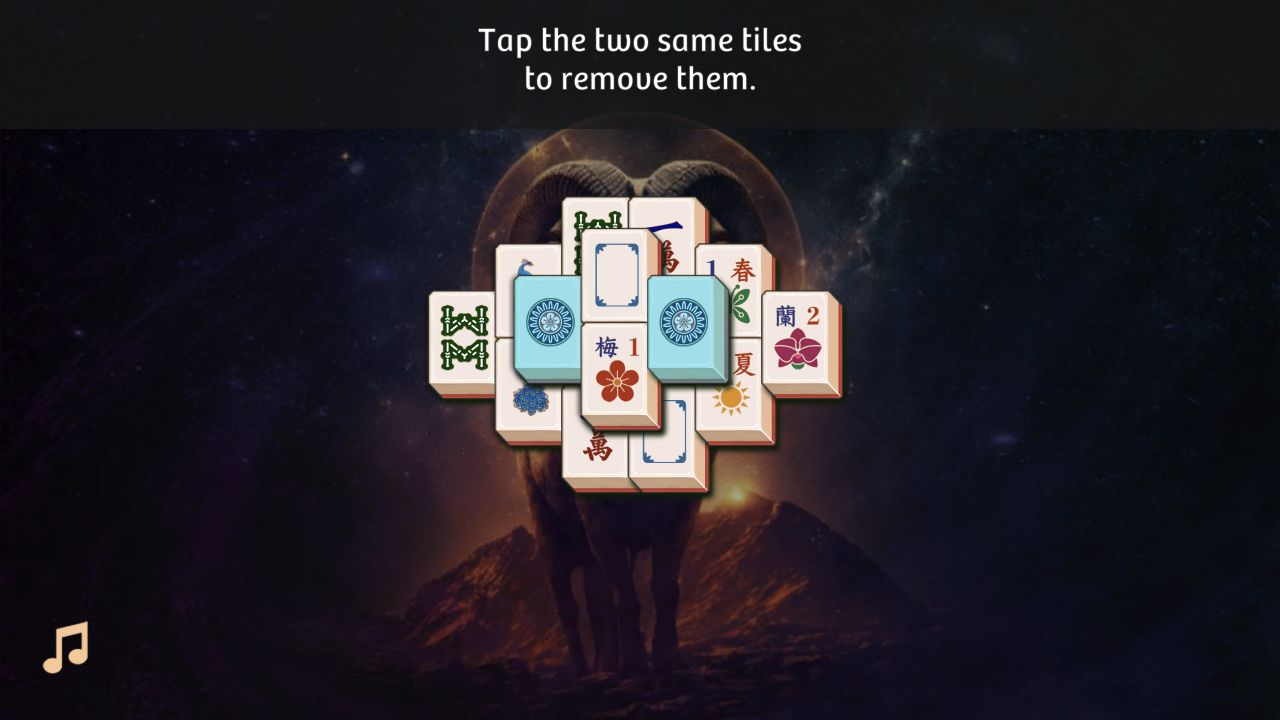
A strong preview should show the full tile layout, zodiac-themed symbols, and visible layered stacks. A screenshot of only one tile would not explain the solitaire structure. A screenshot of a nearly empty board would not show the challenge.
The best image would show several open edge tiles and covered center tiles, making it clear that the puzzle is about unlocking layers.
Strengths
Classic mahjong solitaire rules are proven and easy to learn.
Open-tile logic gives every pair choice strategic weight.
The zodiac theme creates a distinct visual mood.
Relaxed pacing suits brain-training sessions.
Touch and mouse controls both fit the pair-matching format.
Limitations
Poor early pair choices can leave the board stuck.
New players may need time to understand open-tile rules.
Small screens can make detailed symbols harder to read.
The experience depends on clear tile art and fair layouts.
Controls
Tap / click open tile: Select a valid tile. Match identical pair: Remove two matching open tiles. Board scanning: Find pairs that unlock more of the layout.
Controls reference
| Input | Action |
|---|---|
Tap / click open tile | Select a valid tile. |
Match identical pair | Remove two matching open tiles. |
Board scanning | Find pairs that unlock more of the layout. |
Frequently asked
What is an open tile?
A tile with no tile on top and at least one free side, left or right.
How do you clear the board?
Remove pairs of identical open tiles until none remain.
Is it timed?
The catalog emphasizes relaxing classic gameplay rather than speed.
What is the best move?
Usually the move that opens the most covered or blocked tiles.
Why can a visible tile still be unavailable?
It may be covered by another tile or blocked on both left and right sides.
What should beginners learn first?
Learn to identify open tiles before searching for matching symbols.
What should a preview image show?
It should show the layered board, zodiac symbols, and open edge tiles.
Category
Puzzle
Platform
Desktop + mobile
Devices
For Android, For IOS, For Desktop
Orientation
Landscape
Blog
More to read between rounds
Six random blog picks from the editorial desk.
Industry
Understanding HTML5 Games vs the Flash Era
A plain-English look at what changed when browser games moved from Flash to HTML5, and what we gained and lost along the way.
Guides
Casual vs Hardcore: Choosing Your Style of Free Online Gaming
These two labels are everywhere in gaming culture but rarely defined. Here is what they actually mean for your free time.
Skill guides
Five Mistakes New Puzzle Players Make
Most puzzle beginners do not lose because they lack intelligence; they lose because they bring the wrong habits to the board.
Lists
The Best Puzzle Games You Can Finish in 10 Minutes
When you have a ten-minute window, these are the puzzle types that fit cleanly into it without leaving you wanting more time.
Guides
Progression Systems in Idle Games, Explained
The best idle games are not idle all the way through; they move through active, passive, and reset phases that each ask a different question.
Lists
Simple Clicker Games With Real Depth
The strongest clicker games start with a single obvious action and then keep changing what that action means.